
Event Summary
Civil war fractured the Cordoban caliphate and opened the way for taifa politics.
What Happened
The fitna of al-Andalus was the civil-war crisis that broke the practical authority of the Cordoban caliphate between 1009 and 1031. Competing claimants, military factions, court households, and regional powers pulled apart the institutions that had made Cordoba dominant.
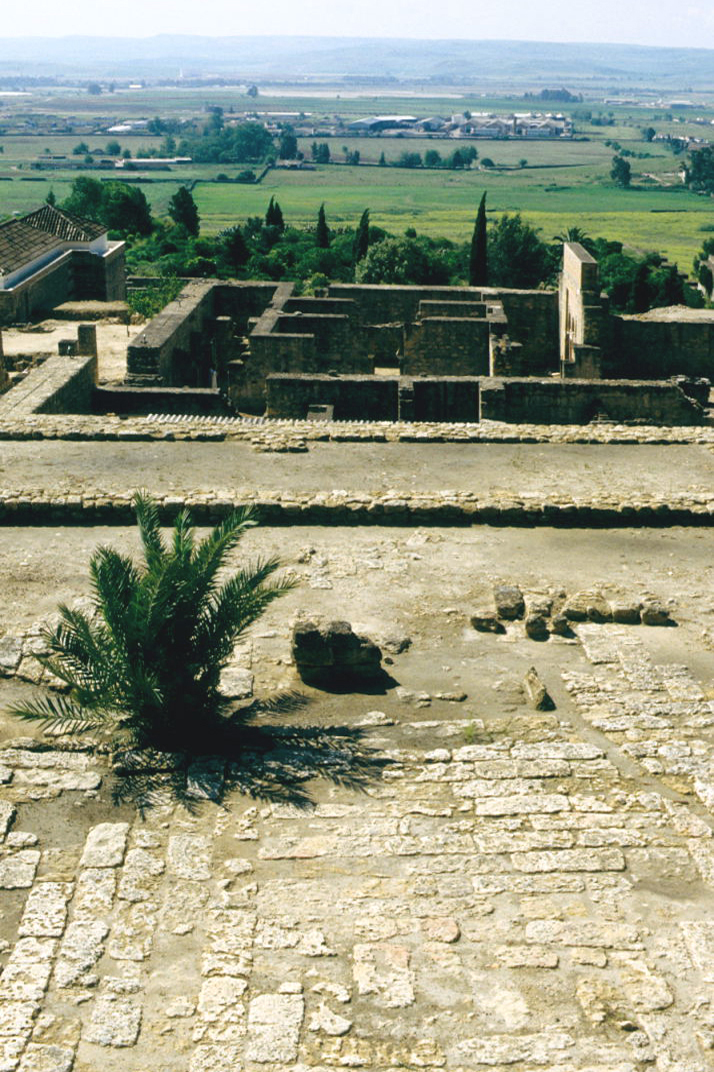
The crisis followed the late caliphal world shaped by al-Mansur's dominance and fragile succession politics. Madinat al-Zahra and Cordoba remain useful visual anchors, but ruins and monuments should be read as traces of power, not as simple explanations for collapse.
Why It Matters
The fitna explains why the caliphate did not simply continue after its most famous period. It is the transition from centralized Cordoban legitimacy to the taifa world of regional courts, rivalry, tribute, and cultural patronage.
It also matters because this is where later nostalgia about caliphal Cordoba has to meet political reality. The fitna shows that collapse was not just a moral story about decadence or betrayal. It was a structural crisis involving succession, military power, factional competition, and the weakening of central institutions.
That broader structural reading is what gives the event value. Too many summaries move directly from "golden age" to "fragmentation" without explaining the mechanism in between. The fitna is that mechanism. It is the period when central authority stopped functioning as a stable political fact.
What Changed
Caliphal authority became contested and then ineffective. Regional rulers gained space to act independently, and the political map of al-Andalus fragmented into taifa kingdoms.
That change altered more than the map. It changed how legitimacy was claimed, how patronage was distributed, and how military and diplomatic decisions were made. The taifa world that followed was not simply “after the caliphate”; it was a new political environment produced by the breakdown itself.
Readers should therefore treat the fitna as a process rather than a dramatic collapse scene. Over two decades, institutions were hollowed out, rival centers advanced, and confidence in central rule broke down. That drawn-out character is precisely why the event deserves its own page instead of being folded into a quick transition note.
Evidence Frame
Civil-war narratives can become stories of moral failure or inevitable decline. The stronger frame is institutional: succession, military power, court control, and regional autonomy all need to be tracked separately.
It also helps to be cautious with visual shorthand. Ruins like Madinat al-Zahra are powerful memory anchors, but they do not explain the fitna by themselves. Monuments preserve traces of lost power; they do not replace the political analysis needed to understand why that power failed.
What This Event Should Teach
This event should teach readers to look for breakdown as a process. The fitna was not a single collapse moment but a prolonged institutional crisis that reconfigured legitimacy, patronage, and regional power. Once that is clear, the taifa period no longer appears out of nowhere.
Related Reading
- The Caliphate of Cordoba before the crisis.
- al-Mansur and late caliphal power.
- Taifa consolidation after 1031.