.jpg)
al-Mansur, known in Christian sources as Almanzor, was the late Umayyad-era power broker and military leader who dominated Cordoban politics under Hisham II. He matters because his career shows how authority could shift from caliphal title to military and administrative control without formally abolishing the caliphate itself.
Why This Person Matters
al-Mansur helps readers understand the strength and strain of the late Caliphate of Cordoba. His campaigns, court management, and concentration of power made him a major figure in both Andalusi political history and Christian Iberian memory.
He is especially useful because he forces a structural question: when does a state still look intact from the outside while real authority has migrated elsewhere inside it? The late caliphate still had ceremony, dynastic language, and military reach, but al-Mansur's career shows how much depended on one household's ability to direct those tools.
Historical Context
Read this profile through the late tenth century, when the caliphate's institutions still projected force but succession politics and court control were becoming more fragile. Military success could reinforce legitimacy while also exposing dependence on one dominant household.
That context matters because al-Mansur did not simply appear as a free-standing war leader. He rose inside a courtly and bureaucratic world, then used access to that world to control appointments, prestige, and coercive force. His authority was therefore both administrative and military, which is one reason his position proved so consequential.
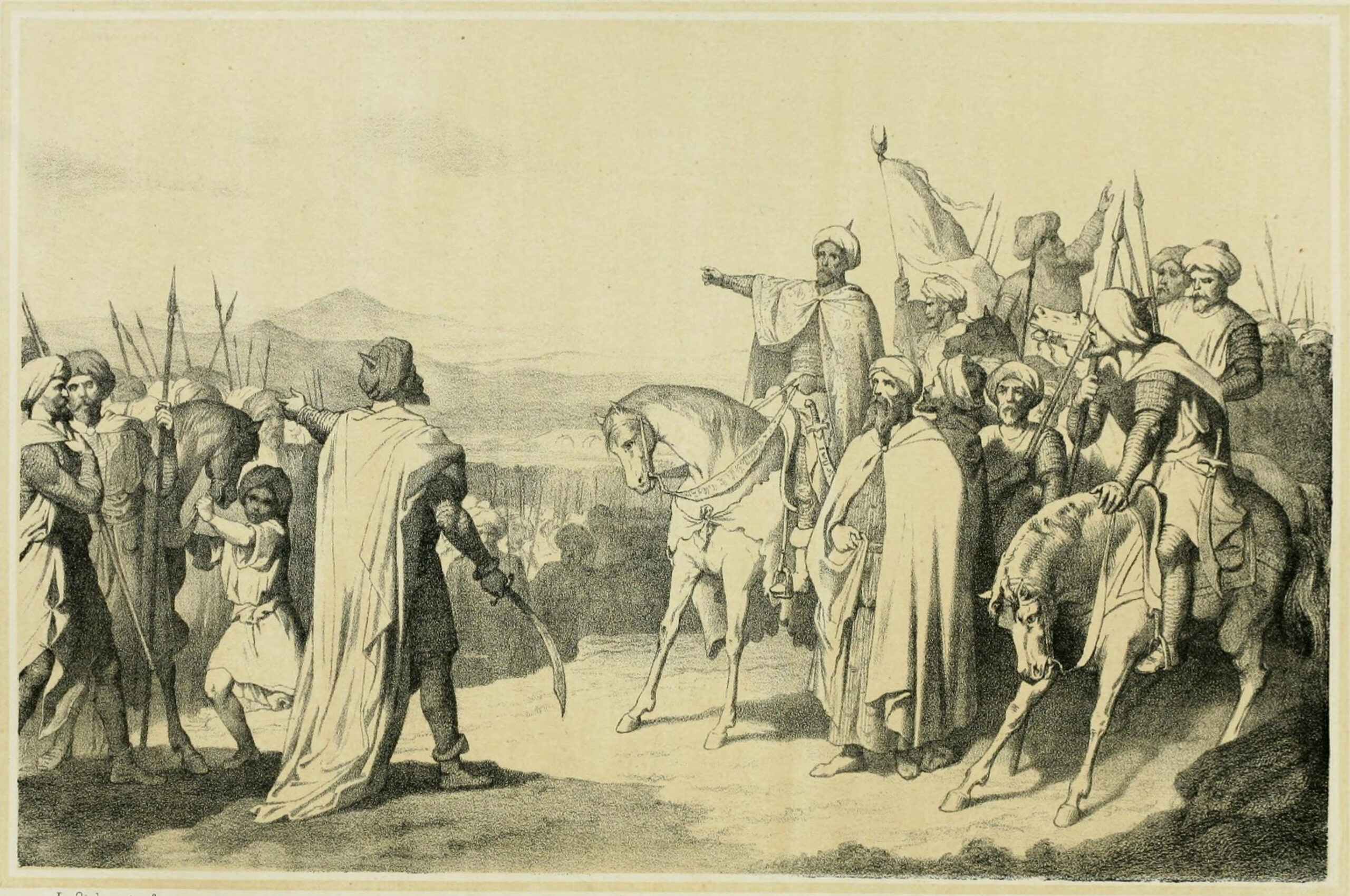
The featured image is a nineteenth-century historical illustration, not contemporary evidence. That matters for this page. Almanzor is one of the figures most reshaped by later visual imagination, especially in Christian nationalist and romantic retellings. Use later art here as evidence of memory, not of tenth-century appearance.
What We Can Say With Care
The record supports al-Mansur's role as a commanding political and military figure. The page should keep campaign narratives separate from later heroic or demonizing traditions, especially when Christian and Muslim sources remember him for different reasons.
It is also reasonable to say that his dominance exposed a tension at the center of the late Umayyad order. The caliph remained symbolically important, but practical command could gather around a hajib and his network. That distinction helps explain why spectacular short-term success did not guarantee institutional durability after his line weakened.
Evidence Limits
Names, titles, spellings, and reputations often shift across Arabic, Latin, Romance, Hebrew, and modern scholarly traditions. Treat exact anecdotes cautiously unless a source trail is clear. Almanzor is remembered intensely in later Christian and Muslim narratives, so campaign details should be separated from reputation-building.
Readers should be cautious with stories that present him as either an unstoppable civilizational hero or a pure destroyer. Those frames usually tell you more about later memory politics than about the mixed realities of frontier war, taxation, court rivalry, and state management in the late tenth century.
Another limit is scale. The famous raids matter, but they can overshadow the less dramatic work that made his power possible: staffing, revenue, patronage, and court discipline. A strong Almanzor page should not let military spectacle replace political explanation.
What To Watch For
- The difference between caliphal title and operative control.
- Raids as political theater, revenue strategy, and frontier violence.
- How one household's strength could deepen long-term institutional weakness.
- The contrast between contemporary constraints and later legendary memory.
Connected Reading
Read Almanzor beside the late caliphate article, then compare the Barcelona and Santiago campaigns as examples of frontier violence and memory. The fitna event shows why his concentration of power did not translate into long-term stability after his household's dominance weakened.