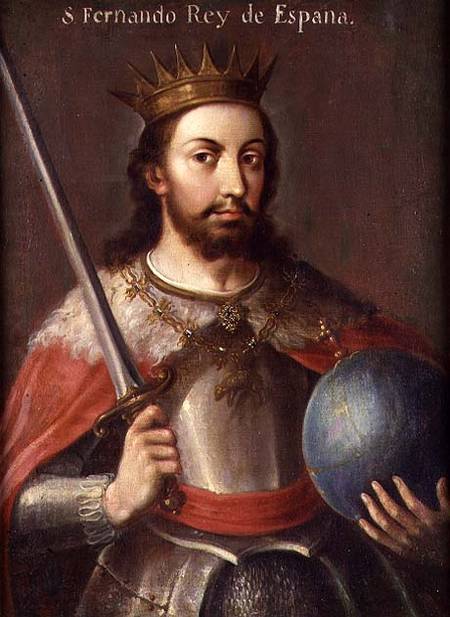

Ferdinand III of Castile was the Castilian-Leonese king whose conquests of major Andalusi cities transformed the political map of thirteenth-century Iberia. He matters for Moor history because his reign marks a major contraction of Muslim-ruled al-Andalus.
Why This Person Matters
Ferdinand III helps readers connect the fall of cities such as Cordoba and Seville to larger shifts in settlement, law, tribute, and religious authority. His reign is also essential background for the rise of Nasrid Granada as a surviving frontier kingdom.
He is especially useful because he turns conquest into a longer process instead of a single dramatic image. Readers can see how urban capture, ecclesiastical reorganization, and legal restructuring shaped the post-conquest world. That makes his page important not only for military history, but for the history of what conquest changed afterward.
Historical Context
Read this profile through thirteenth-century Iberia, when Christian kingdoms expanded into former Almohad and taifa lands. Military conquest was followed by administration, population change, and new arrangements for communities that remained under Christian rule.
Ferdinand's campaigns should be read as part of long frontier restructuring rather than isolated victories. Urban capture was followed by institutional repurposing, ecclesiastical consolidation, and layered legal shifts that mattered for Muslim and Jewish communities who remained.
The featured image is a traditional later portrait, which should be treated as memory rather than direct evidence. For this page, the more important evidence lies in cities, charters, churches, reused mosques, and the altered legal and social landscape that conquest produced. The portrait can remind readers that later royal memory tends to simplify what lived conquest actually did.
What We Can Say With Care
The record supports Ferdinand III's central role in Castilian expansion. The page should avoid treating conquest as a single inevitable march; local politics, siege conditions, alliances, and negotiated outcomes all mattered.
It is also important to separate later sainthood and royal memory traditions from strictly historical reconstruction of policy and social impact.
It is also careful to say that conquest did not erase Muslim presence overnight. Ferdinand matters partly because his reign helps readers understand the transition from conquest to Mudejar conditions, institutional reuse, and long-term Christian political incorporation.
Evidence Limits
Names, titles, spellings, and reputations often shift across Arabic, Latin, Romance, Hebrew, and modern scholarly traditions. Treat exact anecdotes cautiously unless a source trail is clear. Conquest memory often highlights rulers and monuments; the social consequences for residents need separate evidence.
Readers should be wary of triumphal or totalizing summaries. The evidence is stronger when pages specify which city, what policy, which institution, and what consequence are actually under discussion.
What To Watch For
- Conquest as restructuring, not just battlefield success.
- Cordoba and Seville as different but linked transfer cases.
- Later sainthood and royal memory versus historical policy.
- Muslim continuity after conquest under altered conditions.
Connected Reading
Follow Ferdinand through Cordoba in 1236 and Seville in 1248, then read the Mudejar/Morisco article to understand why conquest did not instantly erase Muslim communities. The monument-memory route helps readers separate surviving architecture from the political violence of transfer.