
Event Summary
Aragon captured Zaragoza, changing control in the Ebro valley.
What Happened
In 1118 Aragon captured Zaragoza, one of the major cities of the Ebro valley. The city had been an important taifa center, and its transfer altered the northern and eastern frontier of al-Andalus.
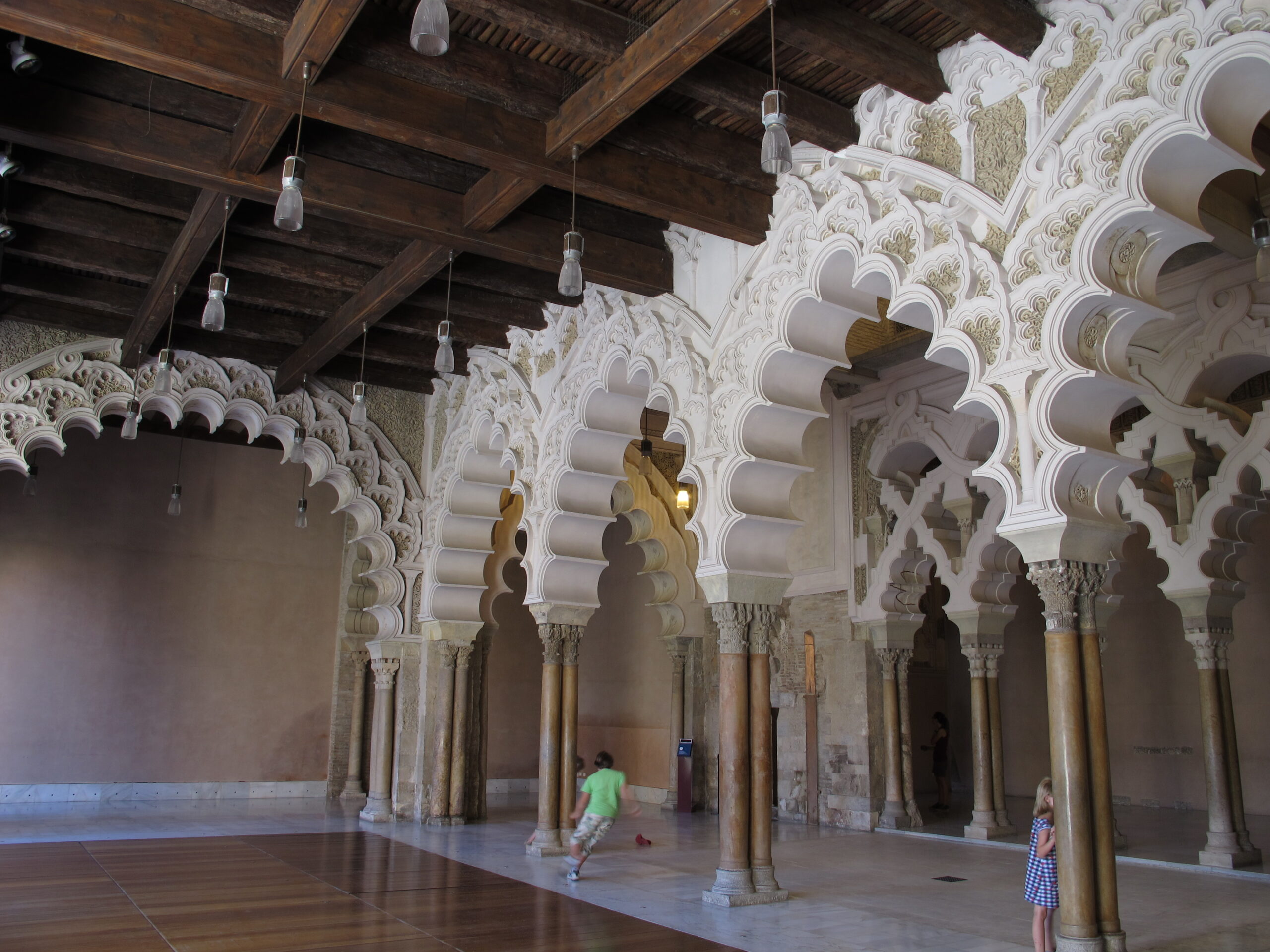
The Aljaferia remains a useful visual route into Zaragoza's Islamic and post-conquest layers. But the event itself should be read through frontier pressure, urban control, negotiated transitions, and the changing power of Aragon.
The fall of Zaragoza also shows that territorial change in Iberia did not move in one simple line from south to north or from one faith to another. It involved cities with their own local histories, administrative continuities, and mixed populations, all entering new political frameworks at different speeds.
Why It Matters
Zaragoza's fall shows that the contraction of Muslim-ruled territory was not only a southern story. It connects taifa politics, northern expansion, and later Mudejar contexts in a region often skipped by beginner timelines.
It is especially important because Zaragoza had real weight as a courtly and strategic center. Losing it changed more than a border line on a map. It shifted the balance of power in the Ebro valley, affected trade and military movement, and reshaped the conditions under which later Muslim communities lived under Christian rule.
What Changed
Aragon gained a major city and reshaped the Ebro frontier. Muslim, Christian, and Jewish communities continued under new arrangements, while earlier Andalusi architectural layers became part of a different political order.
Administrative transfer did not erase local continuity overnight. Tax structures, legal practice, and urban craft life shifted over time and should be read through transition rather than abrupt civilizational replacement.
This longer transition is the real reason the event matters. A conquest narrative alone cannot explain what happened inside the city afterward. Readers should look for how institutions were repurposed, how urban life adjusted, and how later categories like Mudejar only make sense once this kind of political transfer has occurred.
Evidence Frame
Avoid reading the Aljaferia as a frozen taifa object. Its survival includes reuse and later presentation, so claims must identify the period and layer being discussed.
The same is true of Zaragoza more broadly. City capture is easier to date than cultural change. Strong interpretation distinguishes between the event of conquest, the process of incorporation, and the much longer afterlives through which monuments and communities were remembered.
What This Event Should Teach
This event should teach readers to move beyond map-history. Cities do not simply switch colors. Zaragoza shows how frontier conquest becomes an urban transition with legal, demographic, architectural, and memory consequences that unfold over generations.
Related Reading
- Zaragoza and the Aljaferia.
- Taifa courts and frontier life.
- Mudejar and Morisco terminology for later contexts.