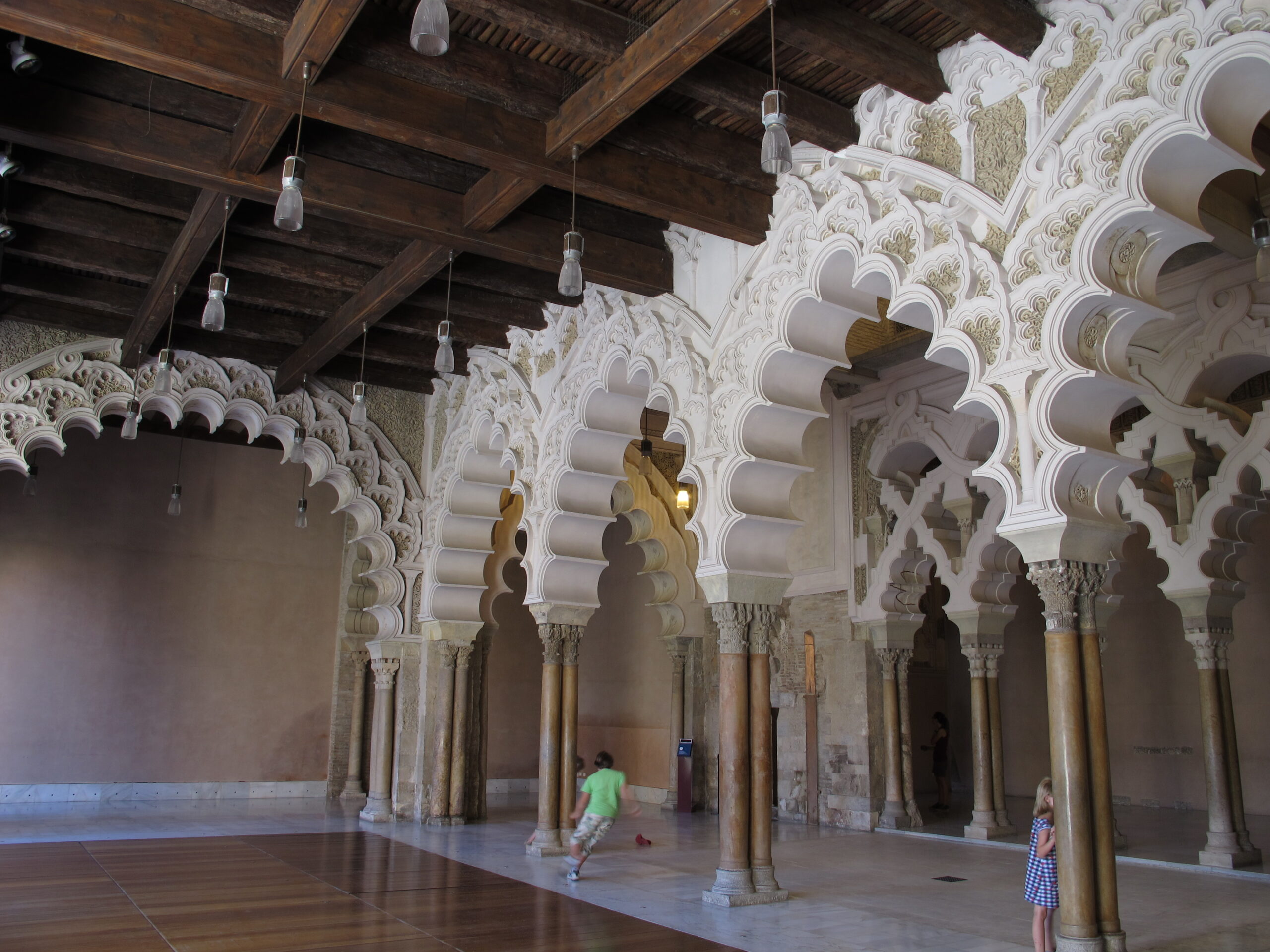

Event Summary
The Cordoban caliphate ended and independent taifa courts consolidated.
What Happened
By 1031 the Cordoban caliphate had collapsed as a functioning political center, and independent taifa kingdoms consolidated across al-Andalus. Former provincial, military, and court elites competed for territory, legitimacy, poets, scholars, and allies.
The taifa period was not simply decline. It produced intense court patronage and diplomacy, but it also exposed smaller states to tribute demands, frontier pressure, and alliances that could shift quickly.
Why It Matters
This event explains why eleventh-century al-Andalus looks politically fragmented even while its court culture remained vibrant. It is the bridge between the caliphal story and later Almoravid intervention.
It also corrects one of the most common reading errors in public history: assuming that political fragmentation automatically means cultural collapse. The taifa period shows a more complicated pattern in which insecurity, experimentation, literary patronage, and diplomatic maneuvering all intensified together.
That is why 1031 should not be read as an end point only. It marks the opening of a different kind of political world, one in which smaller courts became both more creative and more vulnerable. The event matters because it changes the questions readers should ask about power, culture, and survival.
What Changed
Political authority shifted away from one Cordoban center toward competing regional courts. Tribute, diplomacy, military hiring, and cultural patronage became central tools for survival.
That change altered the rhythm of politics. Rulers had to negotiate constantly, not only with enemies across frontier lines but with rivals, clients, and would-be allies inside al-Andalus. The result was a more plural but also more precarious political field.
Readers should therefore see 1031 as a reorganization of political scale. The caliphate's abolition did not leave a vacuum; it produced a landscape of smaller but highly active courts whose competition drove both brilliance and instability. That double effect is central to the period.
Evidence Frame
Avoid using the taifas as a simple morality tale. Sources often judge fragmentation, but local records, poetry, coins, buildings, and later histories show both creativity and vulnerability.
Chronology is critical here: the political break in 1031 did not produce immediate uniform conditions. Different taifa states developed distinct trajectories before later external intervention altered the map again.
It also helps to separate retrospective nostalgia for caliphal unity from the lived reality of taifa adaptation. Later writers often frame the break as obvious decline. The stronger reading asks what new capacities and pressures the taifa world created, not only what it lost.
What This Event Should Teach
This event should teach readers that fragmentation is not the same thing as collapse. The taifa period was politically insecure, but it was also inventive, competitive, and culturally productive. Once readers hold those facts together, eleventh-century al-Andalus becomes far more intelligible.
Related Reading
- Taifa courts and patronage.
- Toledo, Seville, Zaragoza, and Cordoba after the caliphate.
- Why Toledo's capture in 1085 changed the balance.