Editorial Summary
African history fact lists are popular because they make overlooked histories feel visible. They can be a good starting point. They become risky when a memorable line turns into a sweeping claim without dates, places, sources, or limits.
That pattern matters for Moorish history because the topic often sits at the crossroads of African history, Islamic history, Iberian history, and modern identity argument. A short fact list can open that door, but it can also merge several different histories into one oversized conclusion.
What This Page Establishes
Moor History Center reads fact lists as invitations to investigate. The site does not copy them into articles, and it does not treat them as proof. A fact list can tell us what readers want to learn; sources tell us what we can responsibly say.
This is one of the clearest places where content quality either rises or collapses. A low-value page repeats the list. A stronger page uses the list as a prompt and then does the work of locating, narrowing, and sourcing each claim.
The Five-Step Check
Use this quick method before sharing a claim as history:
- Name the claim in one sentence.
- Identify the time and place.
- Find the source type: primary text, archaeology, inscription, coin, later chronicle, modern scholarship, or memory tradition.
- Ask whether the claim has been narrowed enough to test.
- Separate what is verified, what is debated, and what is still unproven.
If the claim still sounds exciting after those five steps, that is good. It means it survived contact with evidence instead of depending on vagueness.
Example: A Broad Claim About the Moors
A claim like "the Moors were Black" is too broad to be useful by itself. A better historical question would ask about a specific century, region, source, and community: North African soldiers in the 8th century, Berber-speaking dynasties in the 11th and 12th centuries, Arabic descriptions of West Africa, or modern uses of the word Moor in identity movements.
The point is not to drain meaning out of the claim. The point is to stop one sentence from pretending to answer every question at once.
Example: A Broad Claim About African Scholarship
A claim about medieval African scholarship becomes stronger when it names a place and source base. Timbuktu and Jenne, for example, can be studied through translated chronicles, manuscript traditions, and specialist scholarship. That is different from using the existence of one scholarly center to make a claim about all of Africa or all Islamic societies.
What Fact Lists Are Actually Good At
Fact lists are especially good at three things:
- signaling neglected topics readers want surfaced
- giving beginners memorable entry points
- pointing toward places, names, and themes worth verifying
They are weak at proportion, nuance, chronology, and source hierarchy. That is why they can inspire a good article but rarely are a good article by themselves.
Why This Method Helps
The method protects two things at once. It protects African history from erasure, and it protects readers from replacing erasure with unsupported certainty. A careful claim can still be powerful; in fact, it usually lasts longer.
What Sources Let Us Say
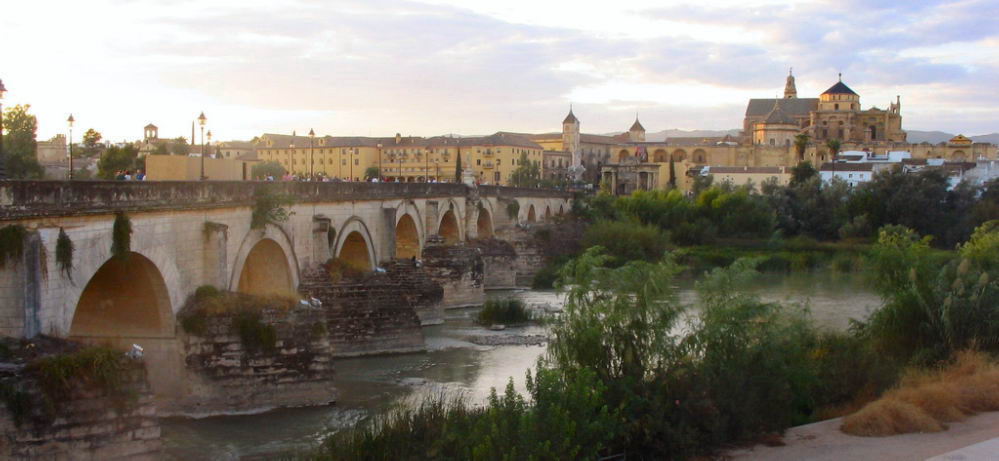
Specialist sources support a rich medieval African past connected by trade, religion, scholarship, diplomacy, and migration. They also show that Africa was not one political or cultural unit. A strong Moor History Center article therefore links Black history interest to specific places such as the Maghreb, Sahara, Sahel, Timbuktu, Jenne, Cordoba, Fez, Marrakesh, and Granada.
What Remains Cautious
Some claims are culturally meaningful because they answer a modern need for dignity or recovery. That does not make them false, but it changes the question. A cultural meaning should be labeled as cultural meaning; a historical claim should be tested as history.
That distinction is especially important when claims travel quickly across social media. A post designed to restore pride may not be designed to survive scholarly scrutiny. Readers deserve to know which function they are looking at.
Working Conclusion
Use fact lists to start the search, then slow down. The strongest history does not ask readers to choose between pride and evidence. It gives them both, in the right order.
Sources and Further Reading
- Walker, Robin / The Black Secret Education Project. 100 Black History Facts
- Fauvelle, The Golden Rhinoceros
- Levtzion and Hopkins, Corpus of Early Arabic Sources for West African History
- Hunwick, Timbuktu and the Songhay Empire
- Glick, Thomas F. Islamic and Christian Spain in the Early Middle Ages (2nd ed.)