Editorial Summary
The Great Mosque of Cordoba is one of the central monuments of al-Andalus because it preserves building phases, political ambition, worship, urban memory, and later Christian reuse in one layered site.
It is also one of the easiest monuments to oversimplify. Readers often meet it as an icon of "Moorish Spain," as a masterpiece of architecture, or as an object of modern political argument. All three are real entry points, but the site's job is to keep the building historical before it becomes symbolic.
Building Phases Matter
The mosque began under Abd al-Rahman I in the late eighth century and expanded over time. Later rulers enlarged, decorated, and reframed the space as Cordoba's power grew. Each phase tells readers something about population, patronage, authority, and urban ambition.
Reading the monument as one simple "Moorish building" misses that timeline.
That timeline is the point. A phased monument lets readers watch rule becoming visible in stone. Expansions are not just bigger versions of the same building; they are political statements about confidence, resources, urban scale, and the relationship between worship and sovereignty.
Arches, Space, and Authority
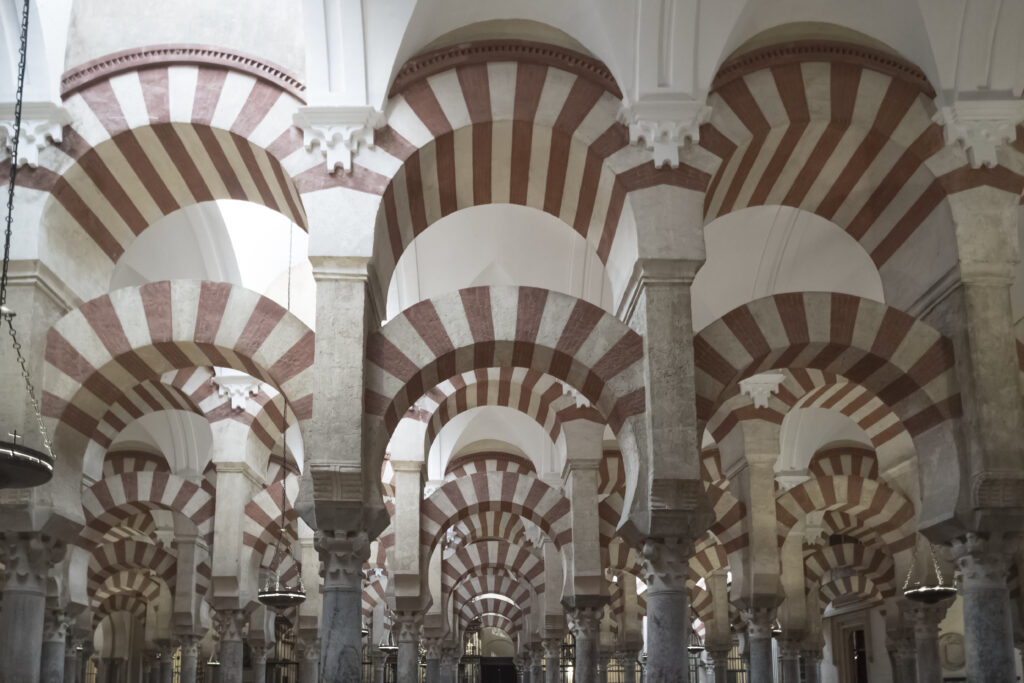
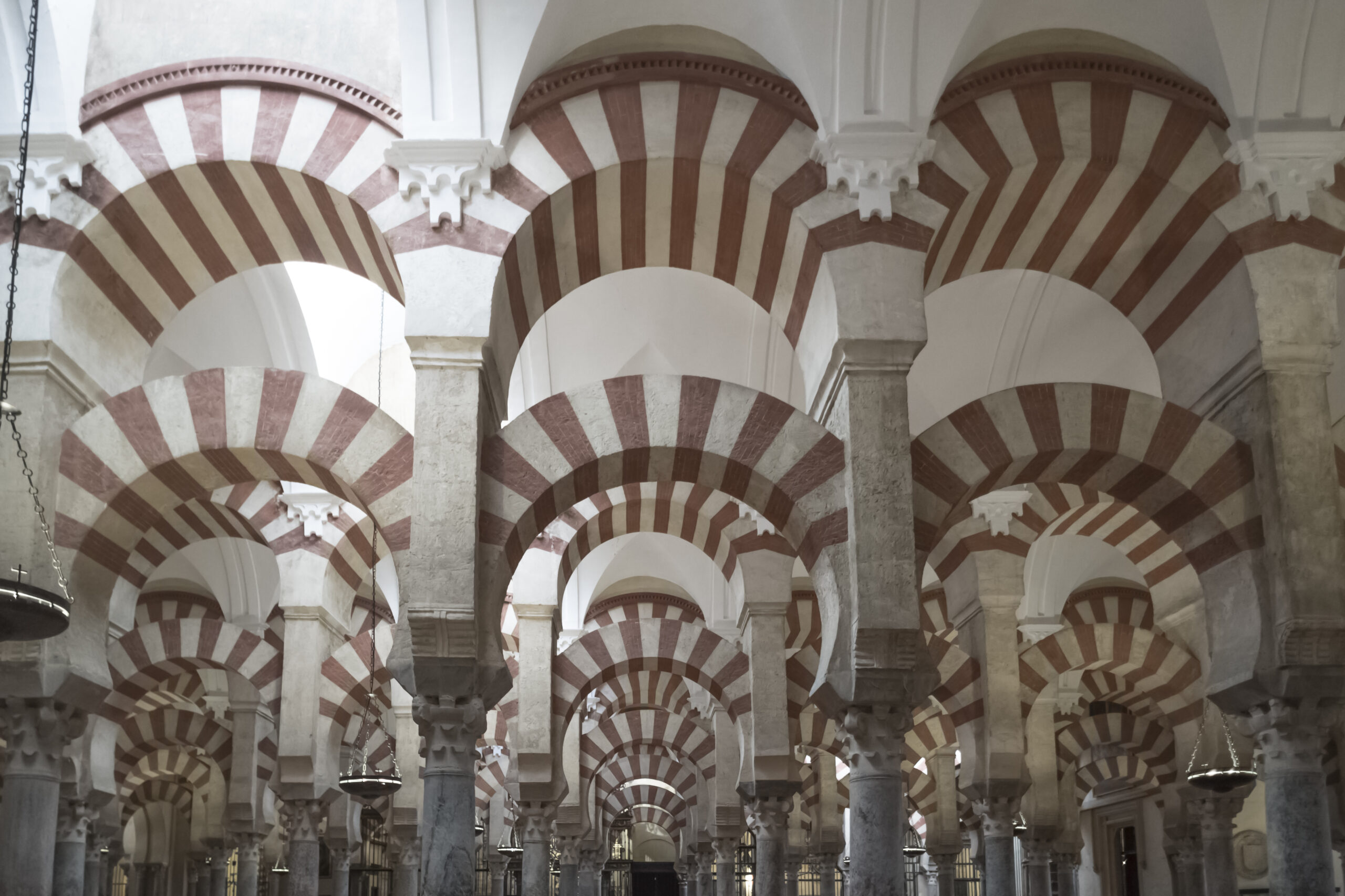
The famous striped arches are not only visual drama. The hypostyle hall organizes movement, repetition, scale, and memory. The mihrab and later caliphal phases show how religious space and political legitimacy could reinforce each other.
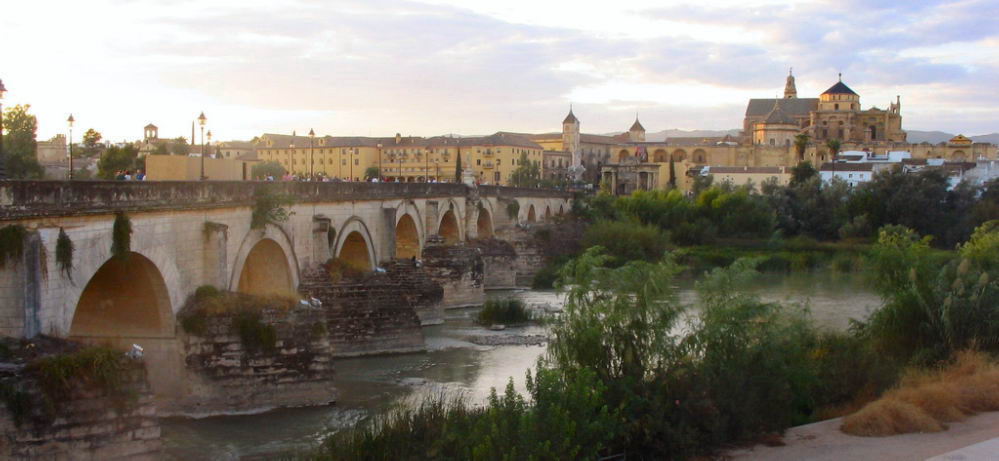
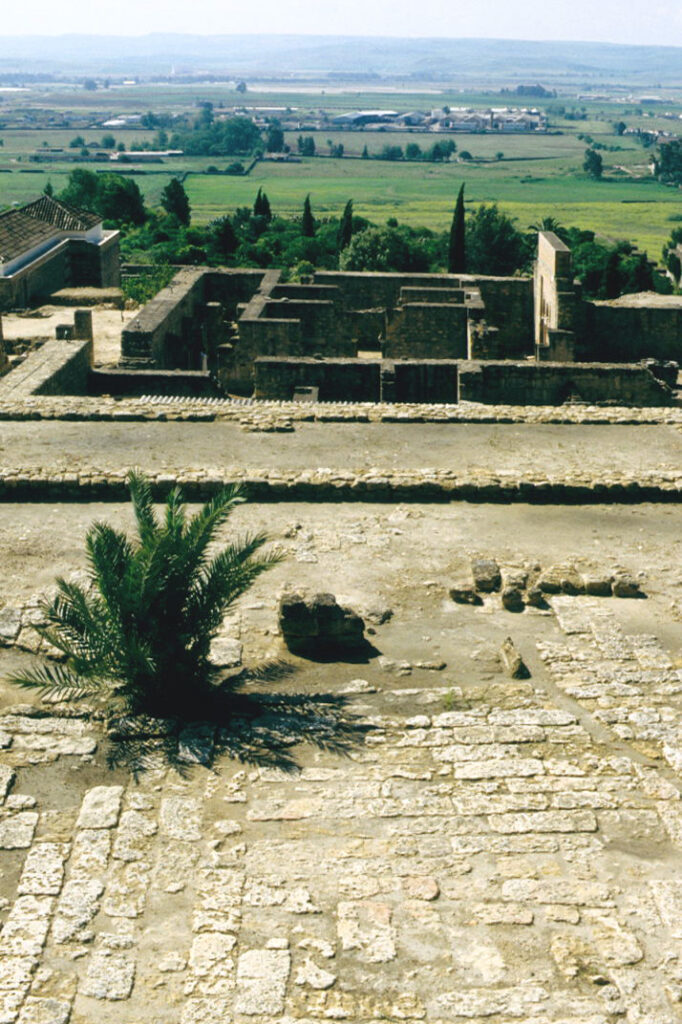
The mosque was part of a wider city and state. Cordoba's religious architecture cannot be separated from Umayyad authority, urban growth, and the later caliphal project.
This is why visitors should resist "pretty pattern" reading. The building is beautiful, but beauty alone explains very little. The better question is how a ruler used scale, craft, materials, and orientation to stage authority. In that sense the mosque is a political text as much as an architectural one.
Christian Reuse
After Castile captured Cordoba in 1236, the building became a cathedral. That later Christian layer is part of the site's history. It should not be erased, but it should also not be used to make the Islamic phases invisible.
Reuse matters because it changes what survives and what later viewers think they are seeing. A visitor looking at the site today is not looking at a sealed tenth-century monument. They are looking at a structure whose Islamic, Christian, conservation, and tourist lives all remain visible at once.
How to Read the Site Today
Modern visitors see a monument shaped by Islamic construction, Christian adaptation, restoration, conservation, tourism, and political debate. A careful account names those layers rather than pretending the site has one meaning.
That is the method this page should teach. Ask:
- which building phase is visible?
- which later intervention altered that phase?
- what did the space do politically as well as ritually?
- which modern argument is selecting one layer and ignoring the others?
Those questions make the monument more useful as evidence and less vulnerable to slogan-history.
What This Monument Can And Cannot Prove
The Great Mosque can strongly support claims about Umayyad patronage, urban ambition, caliphal display, and later Christian reuse. It can also support careful discussion of continuity and rupture in the same site.
It cannot, by itself, prove a simple story of perfect convivencia, seamless civilizational transfer, or timeless Moorish essence. A monument this famous attracts symbolic overuse. The cure is phase-specific reading.
Working Conclusion
The Great Mosque of Cordoba is powerful because it is layered. It teaches architecture, worship, authority, conquest, reuse, and memory in one place.