
Event Summary
Initial construction began on one of al-Andalus's most important monuments.
What Happened
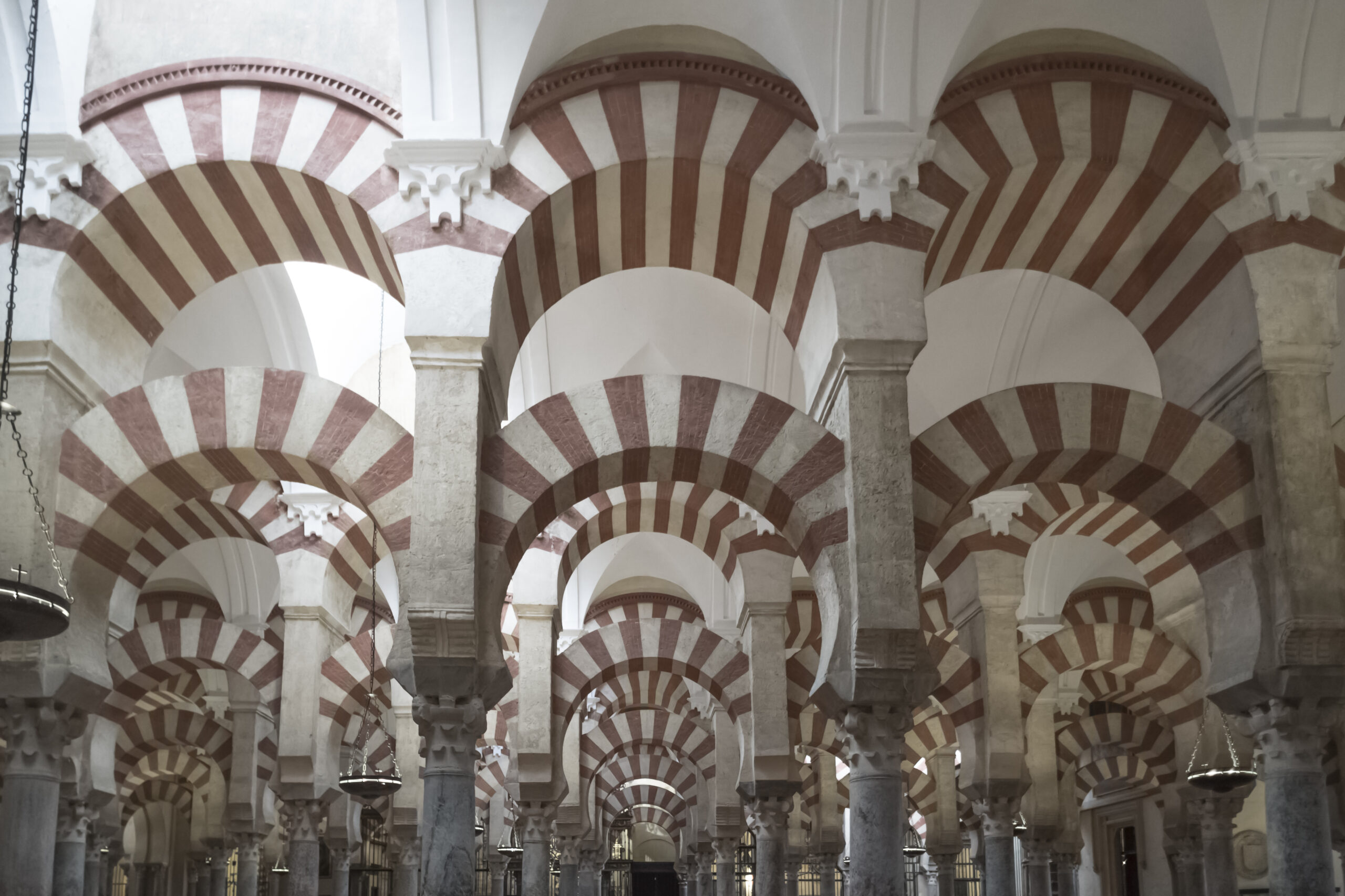
In 785, under Abd al-Rahman I, initial construction began on what became the Great Mosque of Cordoba. The first phase was later expanded repeatedly by successive rulers, so the building readers see today reflects layered interventions rather than one single project.
From the start, the mosque was both devotional and political. Major congregational architecture helped articulate Umayyad legitimacy in Iberia and gave material form to a court-centered urban project in Cordoba.
That initial phase matters because it marks more than the beginning of a famous building. It signals that the Umayyad regime in Iberia was confident enough to invest in a monumental congregational space tied to rule, ritual, and urban prestige. The mosque's history begins as a statement about state formation as much as about worship.
Why It Matters
This event anchors one of the most visible surviving monuments in Moor history. It lets readers connect architecture to governance, ritual practice, patronage, and memory across centuries.
It is also one of the best examples on the site for teaching why single-date monument history is usually misleading. The date 785 is important, but the monument only becomes historically legible when readers learn to track phases, patrons, expansions, reuse, and later restoration.
What Changed
Cordoba gained a monumental congregational center that supported the city's emerging role as a capital. Over time, repeated expansions mapped shifts in state ambition, population, and ceremonial priorities. Later Christian reuse added another historical layer rather than erasing earlier ones.
This means the event should not be read as the birth of a static object. It began a long process in which architecture accumulated meaning under changing rulers and institutions. That is why the monument remains so central in both scholarly work and public argument: it condenses multiple periods into one heavily reused site.
Evidence Frame
The construction date and phased growth are strongly documented, but visual claims made from photographs are often imprecise. Always ask which phase of the building a claim refers to, and whether the feature shown is Islamic, later Christian, or restored.
Readers should also separate admiration from analysis. The mosque is visually powerful, but good historical use depends on narrowing the claim: which patron, which building campaign, which urban context, and which later intervention? Once those questions are asked, the monument becomes much more informative and much less available for slogan-history.
What This Event Should Teach
This event should teach readers to treat monuments as processes rather than snapshots. The Great Mosque of Cordoba is not important only because it began in 785. It is important because that beginning set in motion a sequence of expansions, reinterpretations, and appropriations that can still be studied in the building today.
Related Reading
- Building phases of the mosque and what they demonstrate.
- How "Moorish architecture" should and should not be defined.
- Methods for reading monuments without overclaiming from imagery.