
Place Summary
Western frontier city and taifa center.
Why This Place Matters
Badajoz is a key western frontier city for understanding taifa-era politics and the military geography of the Guadiana corridor. It helps readers track how local rulership, tribute pressure, and cross-border campaigning worked in practice.
The site is especially useful when paired with nearby Merida and later Lisbon routes, because it shows that "frontier" meant a connected regional system, not a single line.
That distinction matters because popular history often imagines frontiers as hard edges between civilizations. Badajoz points instead to a zone of negotiation, raiding, taxation, alliance, and repeated strategic adjustment. It makes the western borderlands look dynamic rather than static.
Historical Context
In the eleventh and twelfth centuries, Badajoz belonged to the contested west of al-Andalus, where taifa governance interacted constantly with Christian kingdoms and trans-regional intervention. Political control shifted over time, but the city's strategic role persisted through these changes.
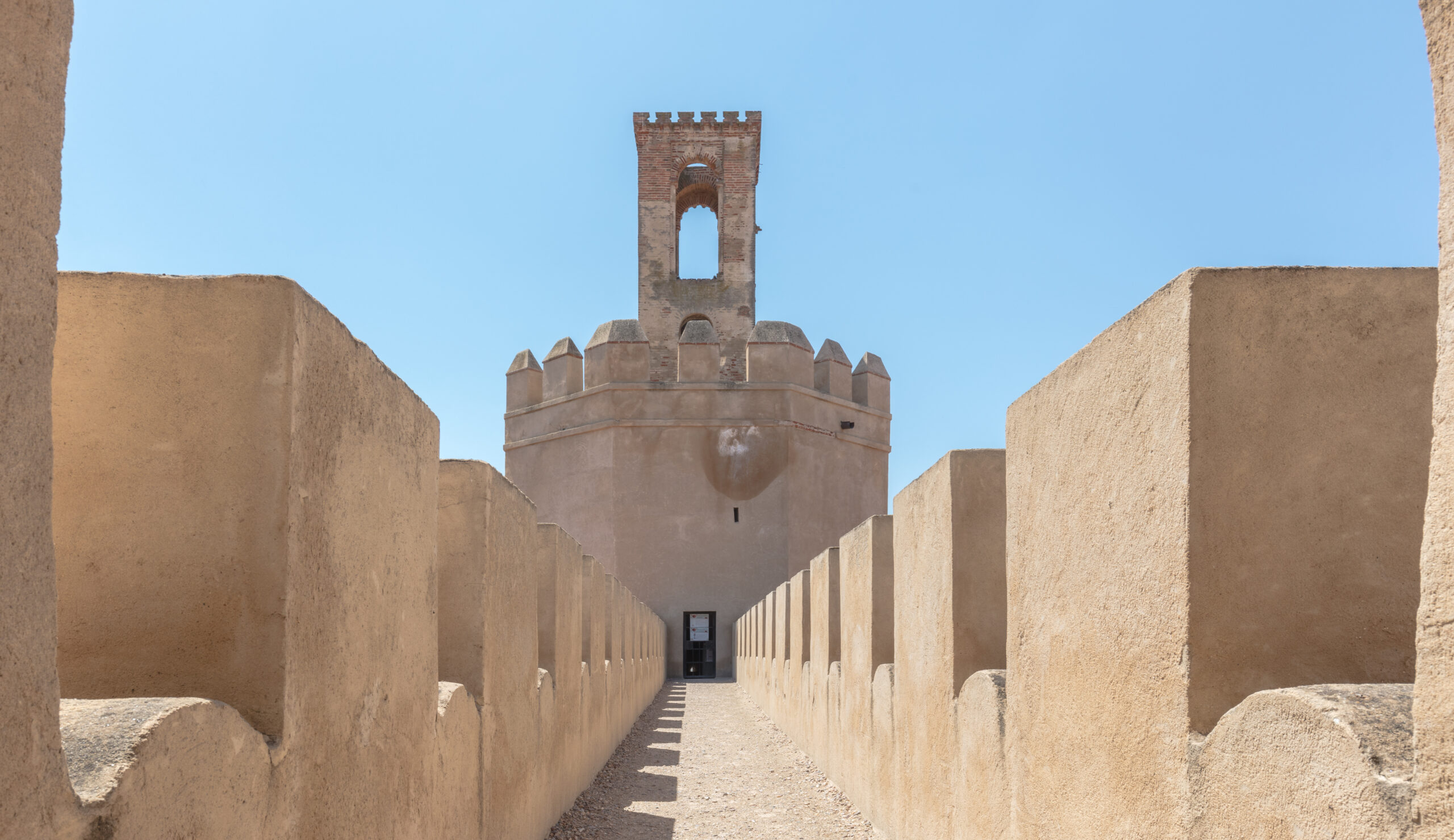
Its fortified landscape reflects that role: defense, surveillance, and authority display were embedded in urban form. Later reconquest-era transformations added new layers without erasing earlier ones.
As a taifa center, Badajoz also helps readers understand political fragmentation at scale. The city was not merely defending itself; it was participating in broader regional systems of alliance, tribute, rivalry, and external intervention. Looking at Badajoz therefore widens the taifa story beyond Toledo and Seville.
Evidence Frame
Badajoz is well suited to period-specific analysis. Avoid broad civilizational claims from one monument image. Strong claims tie architecture and chronology to documented shifts in governance, alliance, and conflict.
Readers should also separate fortification image from political explanation. Towers and walls signal military pressure, but they do not explain it by themselves. The place becomes more informative when the built environment is read alongside campaign history, taifa politics, and the western corridor's longer strategic role.
What to Look For
- Western taifa and frontier dynamics.
- Fortification as both military and political infrastructure.
- Links to Toledo, Lisbon, and Sagrajas-era conflict patterns.
- Layered reuse and restoration in post-medieval memory.
What This Place Should Teach
Badajoz should teach readers that frontier history is regional systems history. The city makes most sense when studied as part of a western network linking fortification, tribute, rival courts, and cross-border campaigning. Once that frame is in place, "frontier" stops sounding like a line and starts reading like a lived political environment.
Related Reading
- The Taifa Period Explained: Politics, Patronage, Rivalry (11th c.)
- Frontier Life on the Marches (Thughur): War, Trade, Coexistence
- Key Battles of al-Andalus: Turning Points and Myths