
Place Summary
Mediterranean port and naval-commercial center in al-Andalus.
Why This Place Matters
Almeria is one of the best places to study how maritime economy shaped Moorish-era politics. As a port city on the southeastern Iberian coast, it connected inland production, Mediterranean exchange, naval logistics, and frontier defense.
For readers moving through the archive, Almeria also balances monument-heavy routes. It foregrounds commerce, ship movement, and urban provisioning rather than palace symbolism alone.
That makes it especially valuable for a site trying to raise content value. Readers often understand al-Andalus through courts, battles, and monuments first. Almeria widens the frame by showing that ports, warehousing, provisioning, and maritime links were just as important to political durability as dynastic prestige.
Historical Context
Almeria rose in prominence under Muslim rule as a fortified and commercially active harbor. Its trajectory was tied to wider shifts in caliphal and taifa politics, and later Christian expansion altered control patterns while preserving parts of its strategic relevance.
As with many ports, political identity changed faster than urban function. Even when rulers shifted, trade corridors, craft sectors, and maritime infrastructures often persisted in adapted forms.
That persistence is exactly why Almeria belongs in this remediation pass. It helps readers see how economic and naval history can outlast neat dynastic boundaries. The city is not just a backdrop to conquest. It is one of the places where the relationship between commerce, defense, and urban life becomes easiest to picture.
It also helps connect southeastern Iberia to a larger Mediterranean system. Almeria makes more sense when read not as a peripheral local city, but as a node in exchange networks linking coastal transport, state revenue, military readiness, and regional craft production.
Visual Reading Notes
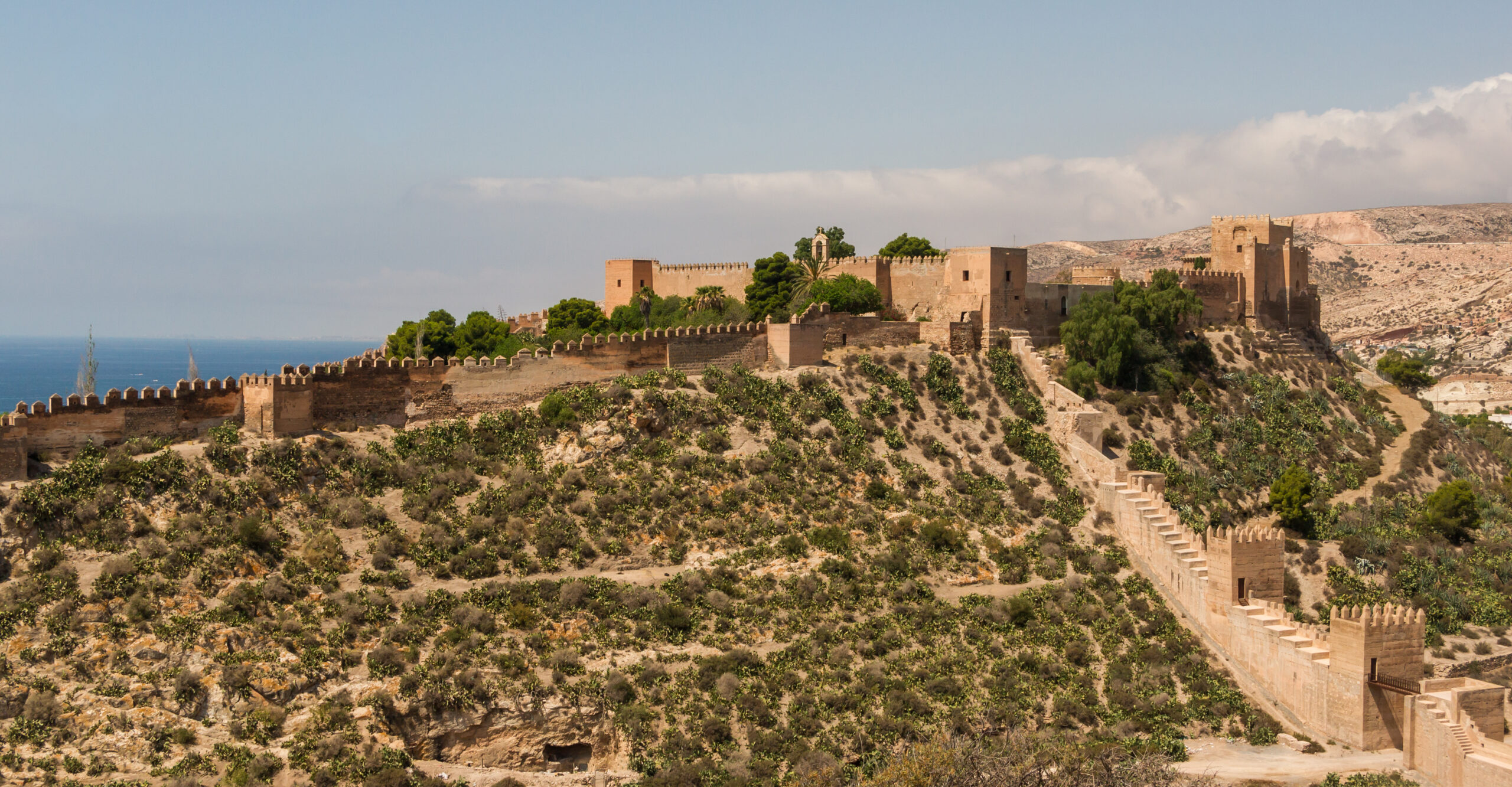
Images of the Alcazaba can over-center military architecture. When studying Almeria, pair fortress views with questions about docks, warehousing, shipbuilding, and merchant movement that are less visible in surviving stone.
Evidence Frame
Strong claims here come from combining political chronologies with trade and urban evidence. Avoid assuming that surviving walls alone represent the full social life of the city.
Almeria is strongest when read through multiple kinds of evidence at once: fortifications, port logic, commercial history, and political transition. That combination is what keeps the page from collapsing into either architecture tourism or generic port language.
Readers should also resist the temptation to treat port cities as economically important but politically secondary. In places like Almeria, commercial function and political power were closely connected. The city mattered because trade, naval movement, taxation, and defense all reinforced each other.
What to Look For
- Port-city logistics and Mediterranean connections.
- How defense architecture supported commercial flows.
- Political transitions and what changed or persisted in urban function.
- Links between Almeria and other Andalusi coastal cities.
What This Place Should Teach
Almeria should teach readers to read cities as systems rather than skylines. A port is not only walls and views; it is labor, exchange, provisioning, taxation, ship movement, and strategic vulnerability. Once that becomes visible, Moorish history stops looking purely court-centered and starts looking more like a working Mediterranean society.