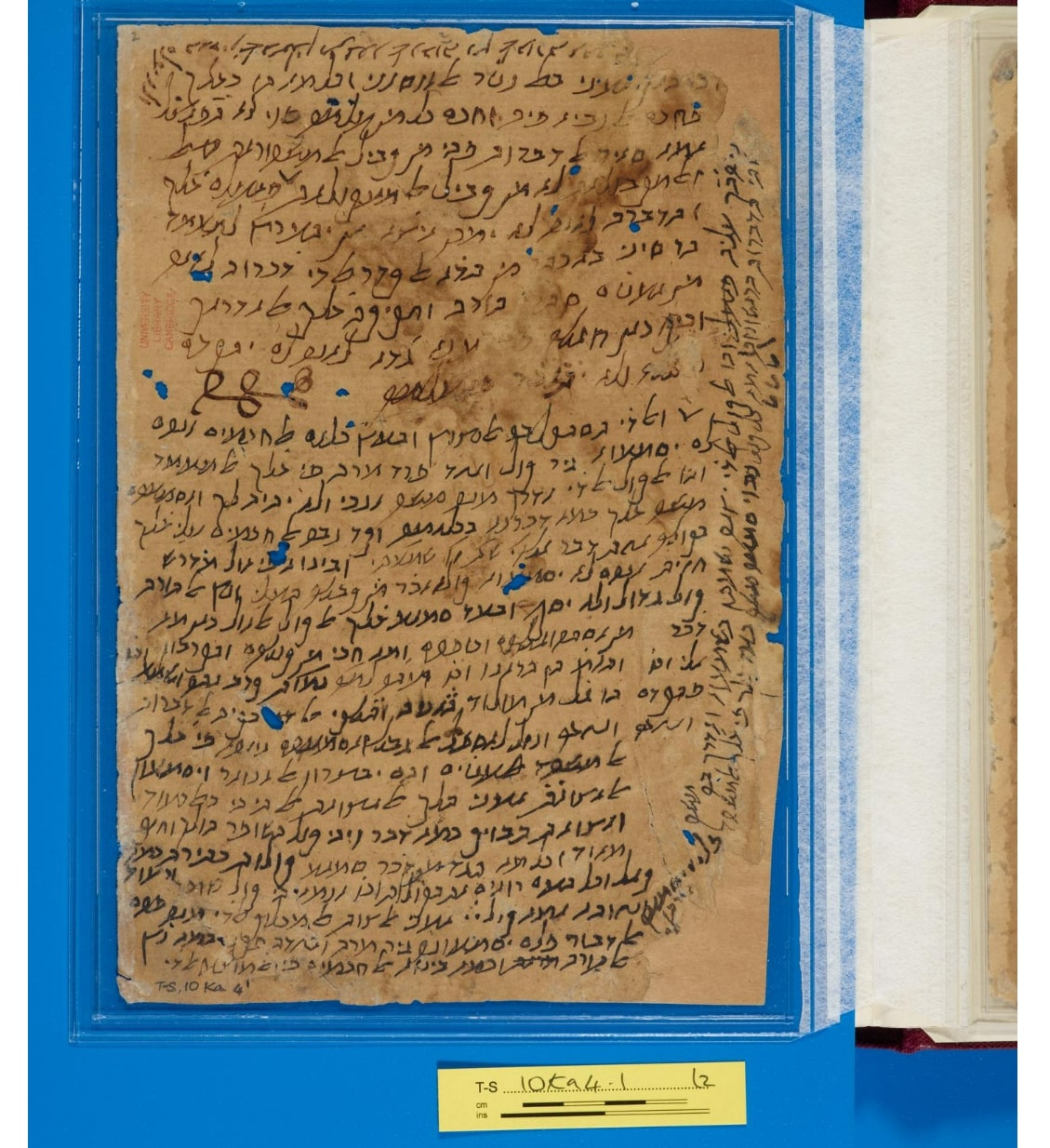

Musa ibn Maymun, better known as Maimonides, matters because his life connects al-Andalus to a much wider learned world. He is especially useful for readers trying to understand how Jewish, Arabic, philosophical, legal, and medical traditions intersected across Iberia, the Maghreb, and the broader Mediterranean.
Why This Person Matters
Maimonides helps readers move beyond siloed religious history. His career shows how a major Jewish intellectual could be deeply shaped by the Arabic-speaking scholarly environment of the western Islamic world while also speaking to audiences far beyond it.
He is one of the strongest biography bridges between Language/Literature and Science/Philosophy. His life makes multilingual and cross-confessional learning concrete without requiring a simplistic harmony story.
He is especially valuable because he lets the site show exchange without sentimentality. Maimonides makes intellectual overlap visible, but his career also reminds readers that mobility, displacement, and adaptation often structured that overlap. That is a stronger story than a vague convivencia slogan.
Historical Context
Read Maimonides through displacement, mobility, and intellectual adaptation. He belongs to a period when political change in Iberia and the Maghreb could reshape where scholars lived, what languages they wrote in, and how they navigated overlapping religious and learned communities.
His profile should sit near Ibn Rushd, Ibn Tufayl, and the translation/transmission articles. Together those pages show a learned world where Arabic intellectual culture could shape Jewish, Muslim, and later Latin conversations in different ways.
The manuscript image is a strong evidentiary choice because it keeps language and textuality in the foreground. Judeo-Arabic written in Hebrew letters is exactly the kind of material fact that helps readers understand why neat civilizational boxes fail. The document itself shows overlap more effectively than a later commemorative portrait would.
What We Can Say With Care
The record strongly supports Maimonides as a major philosopher, jurist, and physician whose Andalusi background mattered. What needs more care is any attempt to make him stand for a simplified civilizational harmony story rather than the more complicated worlds he actually moved through.
The useful claim is layered: Maimonides shows intellectual exchange across boundaries, while also reminding readers that mobility often happened under pressure.
It is also careful to distinguish origin from total identity. Maimonides belongs in a MoorOfUS context partly because of his Andalusi and western Islamic formation, but his significance cannot be contained within Iberia alone. That layered geography is part of the point.
Evidence Limits
Maimonides is often claimed by several modern narratives at once. Keep the page anchored in language, movement, works, institutions, and historical setting rather than symbolic ownership.
Readers should resist letting one famous thinker prove more than the evidence allows. Maimonides can illuminate exchange, multilingual learning, and adaptation. He does not by himself prove seamless coexistence, nor does he erase the pressures that shaped movement and community life.
What To Watch For
- Judeo-Arabic and multilingual intellectual life.
- Exchange under pressure, not harmony by default.
- Andalusi formation within a wider Mediterranean career.
- Modern symbolic ownership versus historical context.
Connected Reading
Read this after Multilingual Iberia, then follow Ibn Rushd and the translation/transmission page. For religious community context, use the article on Jews and Christians in Muslim Iberia.