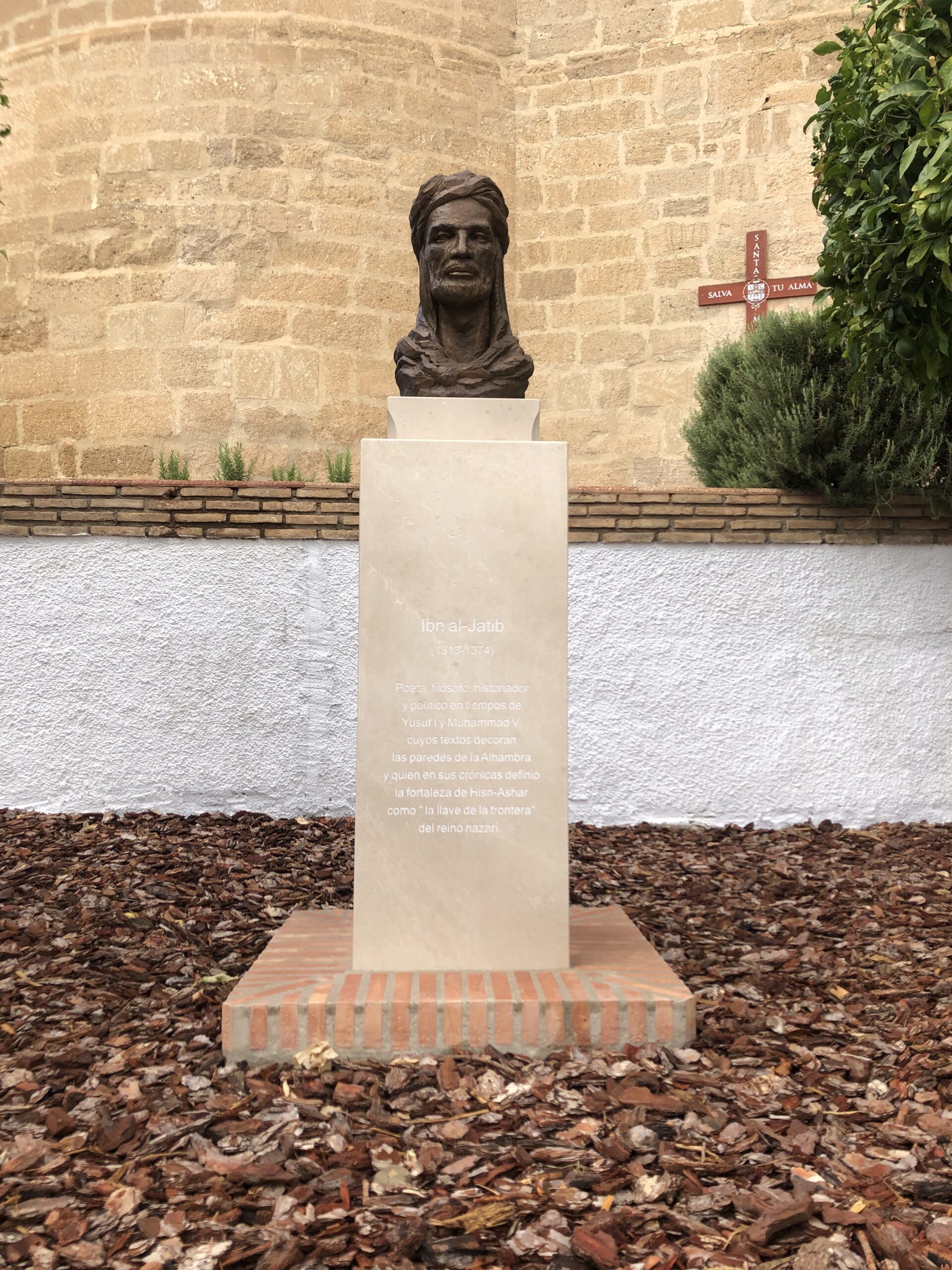

Lisan al-Din Ibn al-Khatib was one of the most important intellectual-political figures of fourteenth-century Granada. He matters because he moved between court service, diplomacy, historical writing, and literary production, which makes his life unusually useful for readers trying to connect Nasrid politics with the wider culture of late al-Andalus.
Why This Person Matters
Ibn al-Khatib helps readers see that late Andalusi statecraft was not separate from scholarship. The same person could serve as vizier, negotiate across courts, compose literature, and write history, which makes him a particularly rich guide to how elite knowledge and political power worked together.
He also makes the Language and Literature hub feel less confined to early Cordoba. Through him, readers move into fourteenth-century Granada, where literary production, diplomacy, factional danger, and Maghrebi connections were tightly intertwined.
Historical Context
Read Ibn al-Khatib through the unstable world of Nasrid Granada, where internal factionalism, court competition, Castilian pressure, and Maghrebi connections all shaped public life. His writings and career belong to a polity that was culturally sophisticated but politically precarious.
His world overlaps with Ibn Khaldun, Muhammad V, the Alhambra, and the broader late Nasrid court. That overlap is useful for session depth because one biography can open several site paths: intellectual history, court politics, architecture, and Maghreb-Iberia mobility.
What We Can Say With Care
The record supports a strong account of Ibn al-Khatib as both a political actor and a major man of letters. It is better to keep that dual role in focus than to flatten him into either a pure literary monument or a generic statesman detached from the textual world he helped shape.
The careful public claim is that Ibn al-Khatib shows how late Andalusi literature and political survival could occupy the same career.
Evidence Limits
Court biographies can become morality tales about brilliance, betrayal, exile, or downfall. Keep anecdotes tied to source trails and avoid making one life stand for all of Nasrid Granada.
Connected Reading
Read this after the Nasrid Granada and Alhambra pages. Then follow Ibn Zamrak for poetry in built space and Ibn Khaldun for the wider political-intellectual world around Granada and the Maghreb.