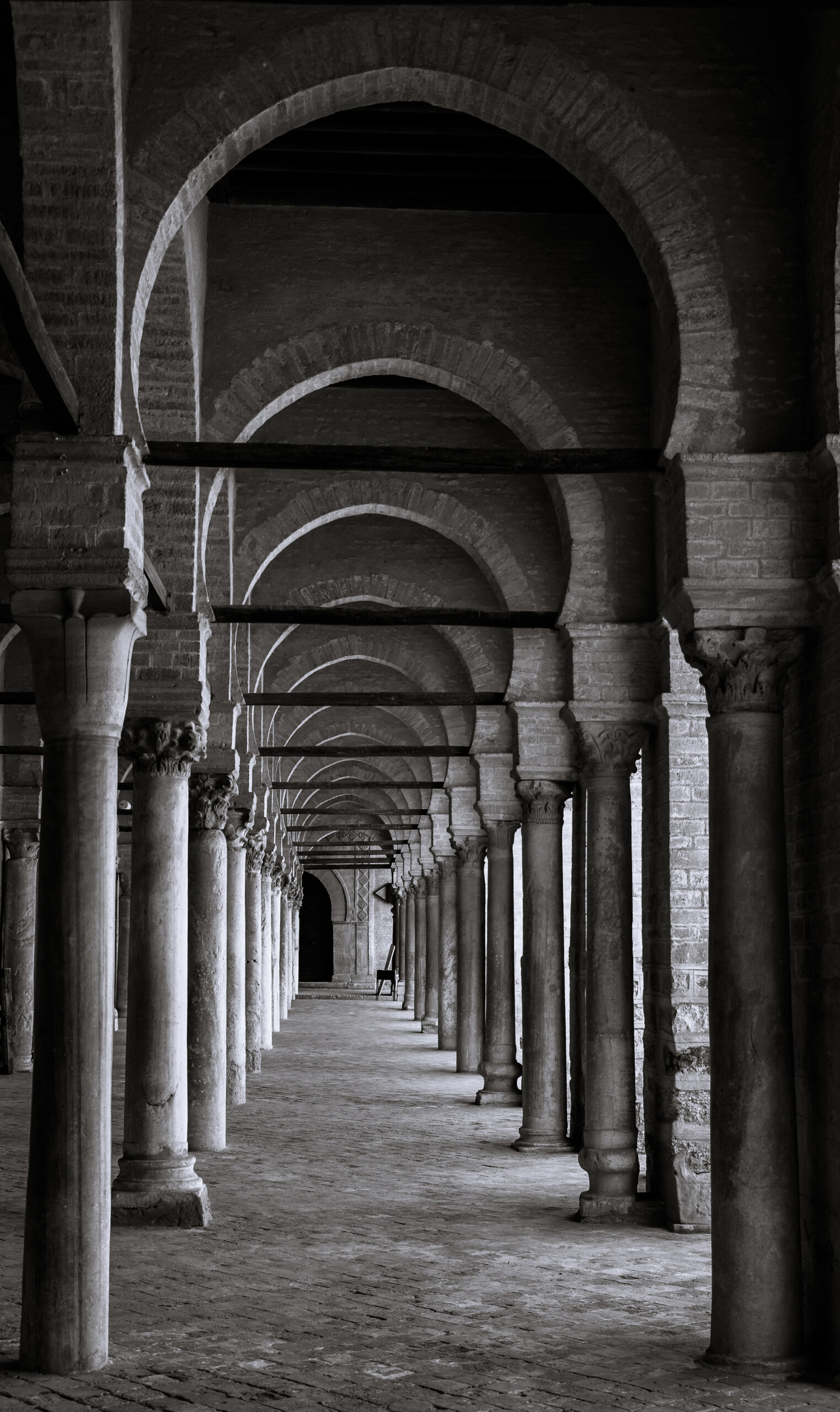
Editorial Summary
Before al-Andalus, the Maghreb already had long histories of cities, pastoral communities, imperial rule, local resistance, Christianity, Judaism, Amazigh/Berber-speaking societies, and early Islam. Treating North Africa only as "where the Moors came from" makes the story smaller and less accurate.
What This Page Establishes
This page gives readers a stable North African frame before they enter the story of al-Andalus. It does not claim that all later Iberian Muslims were North African or that North Africa had one identity. It shows why Moorish history needs the Maghreb as a real historical region, not a vague label.
Historical Context
Late antique North Africa sat between the Mediterranean, the Sahara, and the wider African interior. Roman and post-Roman institutions, Christian communities, local Amazigh/Berber-speaking groups, Jewish communities, and changing imperial powers all mattered before the Islamic conquests.
The early Islamic period did not erase that older landscape overnight. Arabic-speaking elites, Islamization, Arabization, local lineages, frontier zones, and regional centers developed unevenly. Some communities changed language or religion; others kept older identities for long periods. The result was a layered Maghreb, not a single origin story.
Evidence Frame
Do not reduce Maghrebi movements to invasions of Iberia. Many had deep local, religious, commercial, and political histories. The safest reading strategy is to ask which part of the Maghreb is involved, which century is under discussion, and whether the evidence comes from archaeology, Arabic chronicles, Latin sources, later memory, or modern scholarship.
What to Ask While Reading
- Which dynasty or movement is involved?
- What linked the Maghreb, Sahara, and Iberia?
- How did religious reform and state power interact?
- Which community is being described: Amazigh/Berber-speaking, Arab, Andalusi, Jewish, Christian, Saharan, urban, rural, pastoral, or elite?
What Sources Let Us Say
Brett and Fentress support a long view of Berber-speaking North African societies. Bennison helps with the later Almoravid and Almohad empires, when Maghrebi movements directly reshaped al-Andalus. Levtzion and Hopkins help connect the Maghreb to Saharan and West African source traditions. Kennedy and Catlos keep the Iberian side of the story in view.
What Remains Cautious
Many surviving texts were written by elites, polemicists, administrators, jurists, chroniclers, or later historians. Ordinary people, women, enslaved people, rural communities, pastoral communities, and minority voices can be harder to see. Where the record is uneven, this page avoids pretending certainty.
Working Conclusion
The Maghreb before al-Andalus belongs in a layered African and Mediterranean history. The most useful conclusion is specific: name the century, location, community, and type of evidence before turning North Africa into a claim about "the Moors."