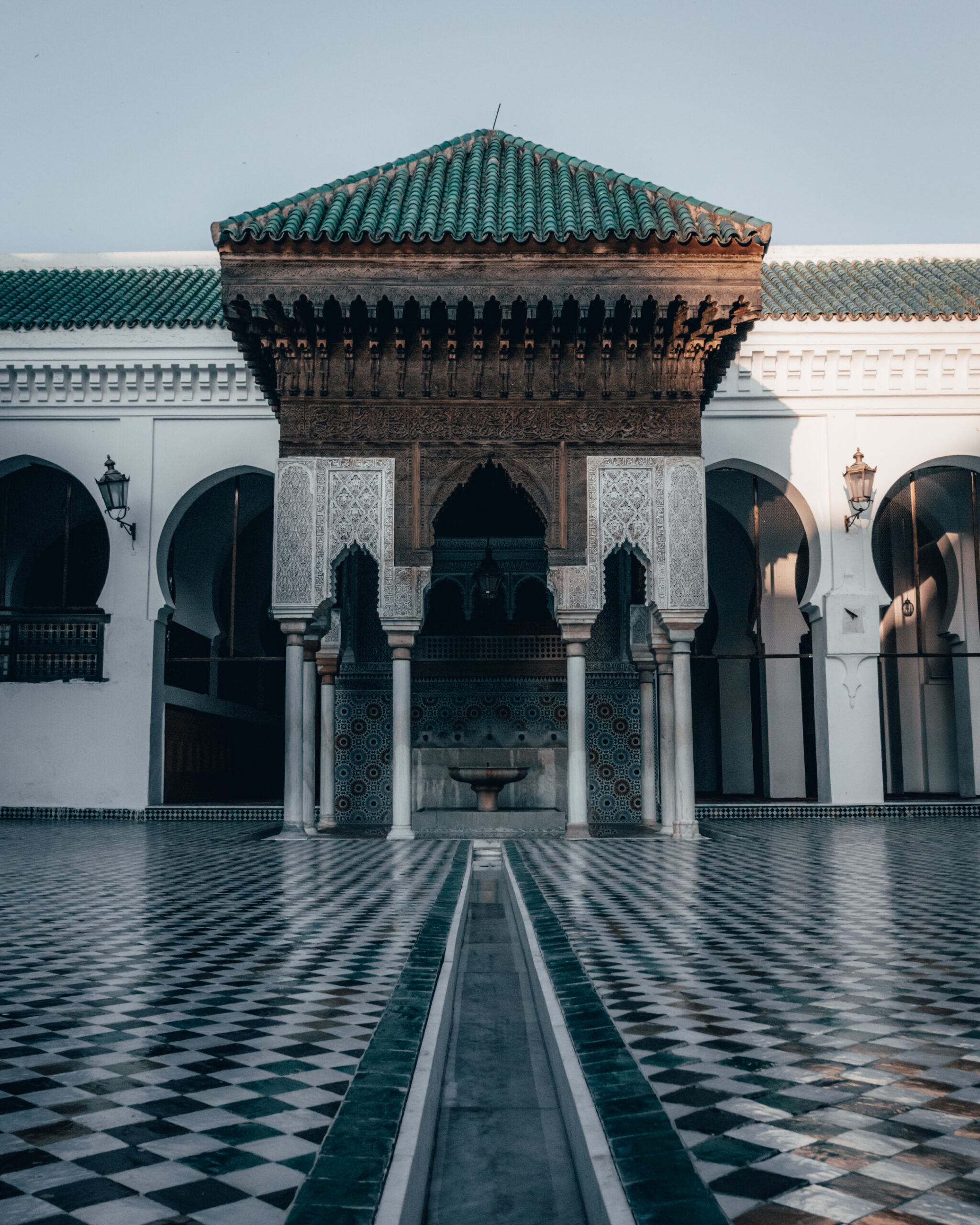
Editorial Summary
Mosques, madrasas, and waqf endowments were not only "religious buildings." They were institutions that organized worship, teaching, property, salaries, charity, memory, public authority, and urban life.
They also leave different kinds of evidence: architecture, inscriptions, legal records, biographies, endowment traditions, restoration histories, and later institutional memory.
Mosques as Public Institutions
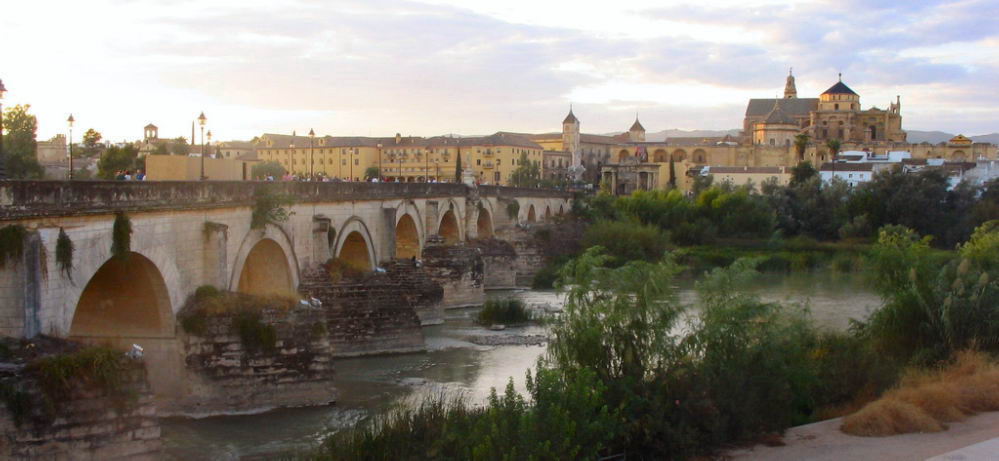
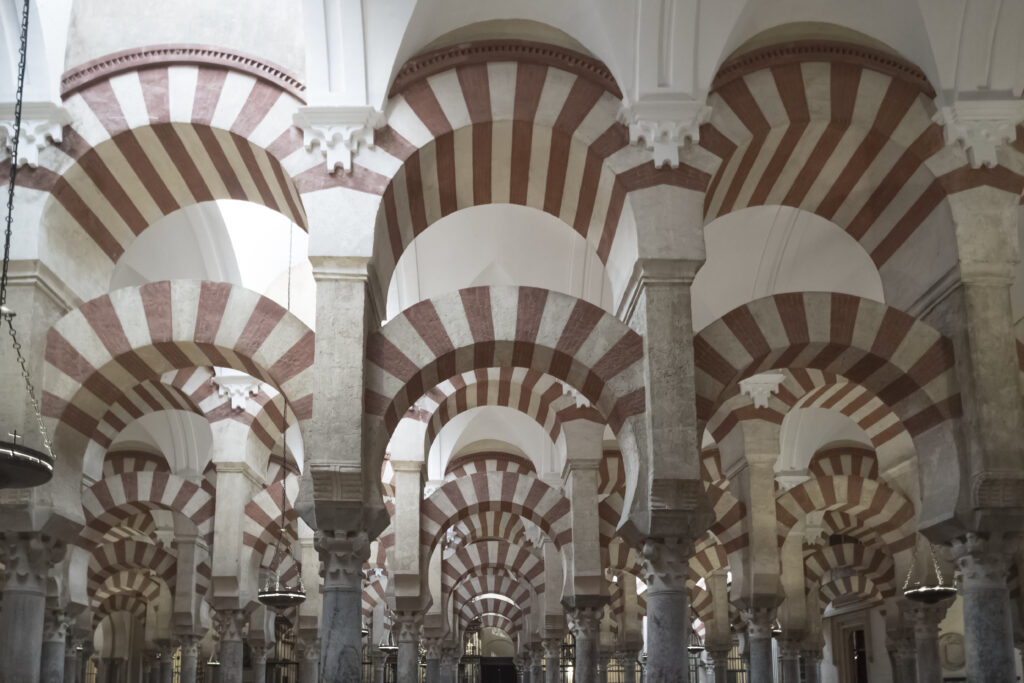
A major mosque could anchor worship, public gathering, teaching, legal authority, neighborhood identity, and ruler legitimacy. The Great Mosque of Cordoba is a powerful example because building phases, patronage, architecture, and later reuse all preserve institutional history.
Smaller mosques and neighborhood spaces are harder to see, but they mattered for daily religious life. The evidence is strongest when a page can identify a specific site, inscription, record, patron, or phase.
Madrasas and Teaching
Formal institutions of learning developed differently across regions and periods. Readers should not assume that every mosque was a university or that every teaching circle worked like a modern school. Teaching could happen through scholars, texts, circles, travel, patronage, and institutions.
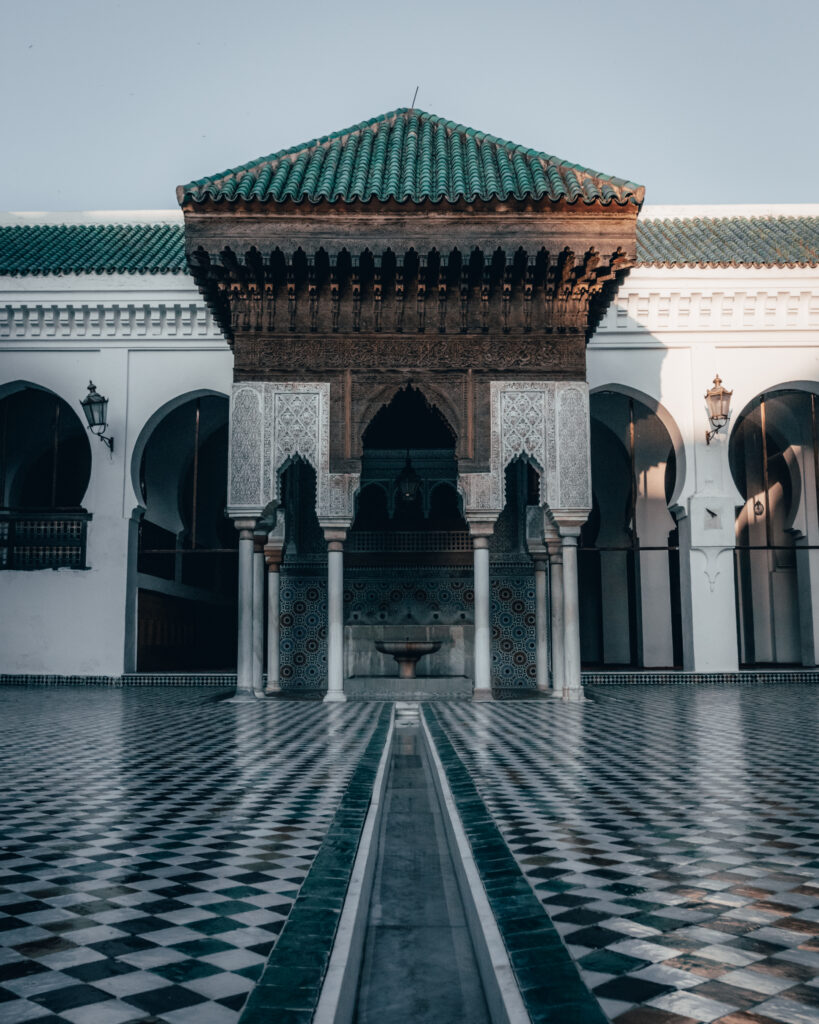
al-Qarawiyyin is essential here, but it needs careful wording. Its later institutional history is strong; claims about its earliest founding traditions and modern "oldest university" language need source-critical framing.
Waqf as Infrastructure
Waqf means an endowment that dedicates property or revenue to a religious, charitable, educational, or public purpose. In practice, endowments could support buildings, teachers, students, lamps, water, repairs, poor relief, and institutional continuity.
That makes waqf a bridge between piety and economics. It turns religious commitment into property management.
Evidence Problems
Endowment records may not survive evenly. Famous institutions are better documented than ordinary ones. Later communities may also preserve founding stories because those stories give prestige, identity, and continuity.
Reader Method
For an institution claim, ask:
- Is the page describing a mosque, madrasa, waqf, teaching circle, or later university?
- What is the earliest evidence for the claim?
- Is the building phase original, restored, reused, or expanded?
- Does the source distinguish founding memory from documented institutional development?
What Sources Let Us Say
The sources let us describe major institutions, endowment logic, learning cultures, and some site histories. They are weaker for proving uninterrupted modern institutional claims without careful documentation.
Working Conclusion
Mosques, madrasas, and waqf make the knowledge center more useful because they show how belief became durable infrastructure: buildings, property, teaching, maintenance, and public memory.