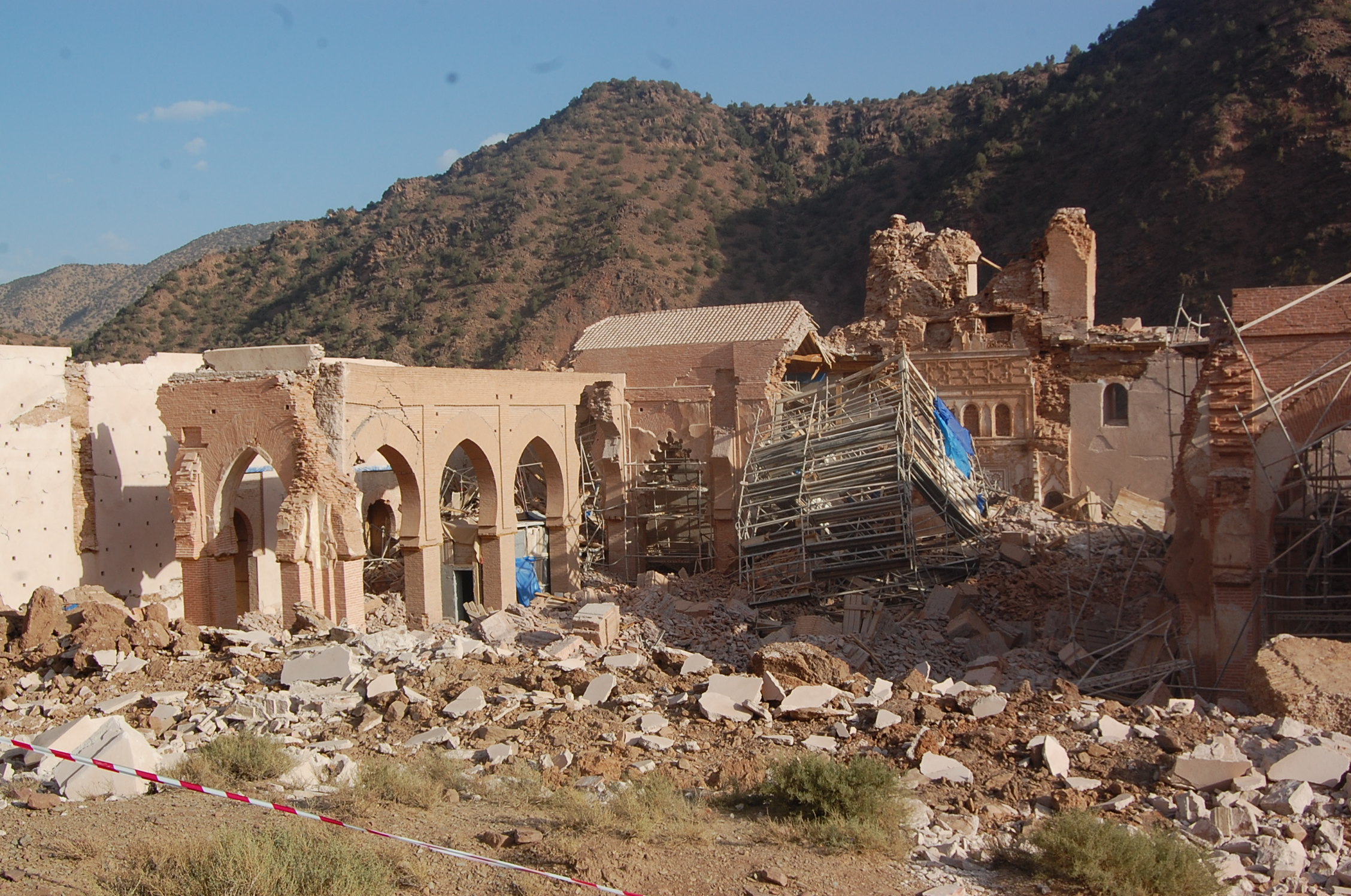

Event Summary
The Battle of Alarcos in 1195 was a major Almohad victory over Castile. It confirmed that Almohad power could still project force into Iberia, even as the political balance of the peninsula remained unstable.
What Happened
Almohad forces under Abu Yusuf Yaqub al-Mansur defeated a Castilian army near Alarcos. The victory followed the Almohad consolidation of power in North Africa and al-Andalus, and it temporarily checked Castilian expansion. It did not, however, end frontier conflict or create permanent Almohad dominance over all Iberian politics.
That qualification matters because Alarcos is often remembered only as a prelude to Las Navas de Tolosa. Read that way, it becomes a temporary interruption in an assumed Christian advance. In fact, the battle demonstrates that Almohad military capacity in Iberia was real, organized, and still capable of reshaping frontier expectations late in the twelfth century.
Why It Matters
Alarcos gives readers a necessary counterweight to narratives that treat Christian expansion as a straight line. Before Las Navas de Tolosa in 1212, Almohad military and ideological power remained formidable. The event also links Iberian history to Marrakesh, Tinmal, and the wider Maghrebi empire.
It is also a good reminder that individual battles matter differently at different scales. For frontier communities, the consequences could be immediate and brutal. For long-range political history, the battle mattered because it reset calculations about power, legitimacy, and vulnerability on both sides.
What Changed
The battle extended Almohad prestige and delayed Castilian momentum. It strengthened the public image of Yaqub al-Mansur, while also setting up the next phase of militarized frontier politics. The later reversal at Las Navas should be read as part of that longer sequence rather than as proof that Alarcos was insignificant.
Readers should therefore connect Alarcos to the wider question of how empires project force across regions. The battle was not only an Iberian event. Its meaning depended on the Maghrebi political base that made such campaigns possible, and on the reputation effects that victory carried back across the strait.
Evidence Frame
The outcome is well established, but numbers, speeches, and moralized descriptions vary by source tradition. Treat the battle as a military and political event with real consequences, while avoiding claims that one battle explains the whole fate of al-Andalus.
It also helps to resist hindsight. Because Las Navas later acquired such importance, Alarcos can look like a temporary delay on the road to decline. Strong interpretation avoids that trap and takes the victory seriously on its own terms before placing it in a longer sequence of reversals.
What This Event Should Teach
This event should teach readers to distrust straight-line narratives. Alarcos shows that late twelfth-century Iberian politics were still open, contingent, and strongly shaped by Maghrebi imperial intervention. The fact that a later reversal occurred does not make this victory less historically significant.
Related Reading
- Read the Almohad article for the movement's reform program and imperial geography.
- Compare Alarcos with Las Navas de Tolosa to see how battle memory can compress complex change.
- Use the Tinmal and Marrakesh place pages to connect the battle to the Almohad North African base.