
Place Summary
Eastern Iberian city central to Crown of Aragon and Morisco history.
Why This Place Matters
Valencia is one of the strongest places for understanding why post-1492 Moorish history cannot be told only through Granada. In the Crown of Aragon, Muslim and later Morisco communities faced a different timeline of policy, labor, surveillance, and expulsion.
The city helps readers track regional variation: forced conversion in Aragon came after Castile's 1502 decree, and the 1609 expulsion affected Valencian Moriscos especially early and intensely.
Historical Context
Valencia had Islamic, Christian, and Morisco histories layered into the same landscape. After Christian conquest, Muslim communities continued under changing legal arrangements before forced conversion policy extended into Aragon in 1526.
By the early seventeenth century, Valencia became central to the expulsion story. That history should be read through law, landholding, rural labor, religious pressure, and state policy rather than through a single dramatic departure image.
Valencia matters because it forces regional precision. Too much public writing lets Granada stand in for all post-conquest Muslim and Morisco history. Valencia shows a different chronology, different political setting, and different social pressures, which is exactly what the site needs if it wants to look historically serious.
Visual Reading Notes
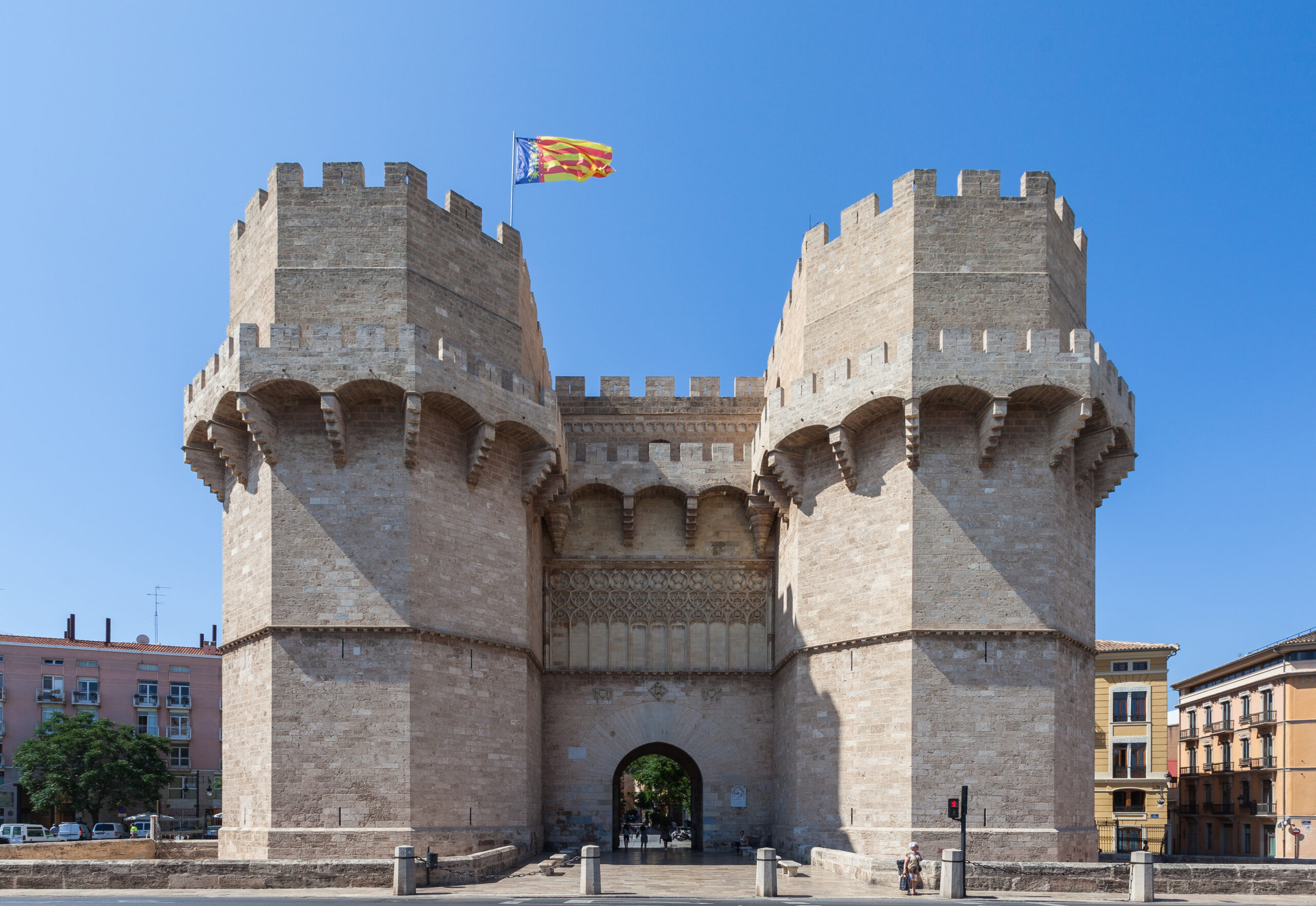
The Torres de Serranos image gives a city-gate anchor, but it is not itself proof of Morisco experience.
Useful questions:
- Is the claim about medieval Islamic Valencia, Aragonese policy, or Morisco expulsion?
- Which date matters: conquest, 1526, or 1609?
- Does the source distinguish local Valencia from all of Spain?
Evidence Frame
Valencia is essential for regional precision. Avoid collapsing Castile, Aragon, Granada, and Valencia into one policy timeline, and avoid using Morisco history to make unsupported ancestry or identity-certification claims.
This page is strongest when it slows readers down. Instead of asking “what happened to the Moriscos?” in the abstract, it teaches them to ask where, under which crown, under which decree, and under what labor and surveillance conditions.
What to Look For
- Crown of Aragon chronology distinct from Castile.
- The 1526 forced conversion extension.
- Morisco communities, labor, land, and surveillance.
- Valencia's early role in the 1609 expulsion.
- Regional evidence rather than Spain-wide shortcuts.
What This Place Should Teach
Valencia should teach readers that regional variation is not a footnote. The city matters because it breaks the habit of using Granada as a stand-in for every post-conquest Muslim and Morisco experience. Once Valencia is taken seriously, the later coercive history of Iberia becomes much more precise and much less mythic.
Related Reading
Start with the forced-conversion article, then read the Mudejar/Morisco terminology guide and the Morisco expulsion page. Pair Valencia with Granada to see why post-conquest history differed by region.