_-_panoramio.jpg)
Place Summary
Former Visigothic and Andalusi city captured by Castile in 1085.
Why This Place Matters
Toledo is a hinge city. Its capture in 1085 changed the military balance in Iberia, while its later reputation for translation, coexistence, and layered culture makes it a useful test case for careful claims.
Historical Context
Toledo had Visigothic, Andalusi, taifa, and Castilian histories. After Alfonso VI took the city, it became a frontier and courtly symbol where Arabic, Latin, Hebrew, Romance, law, diplomacy, and memory overlapped in complicated ways.
The city should not be used as a shortcut for simple harmony or simple conflict. It shows both exchange and power imbalance.
That tension is what makes Toledo so valuable. It is one of the clearest places where readers can see how translation, learning, politics, conquest, and minority life all interact without collapsing into one moral lesson. A strong reading of Toledo keeps institutional power, urban change, and multilingual exchange in the same frame.
Visual Reading Notes
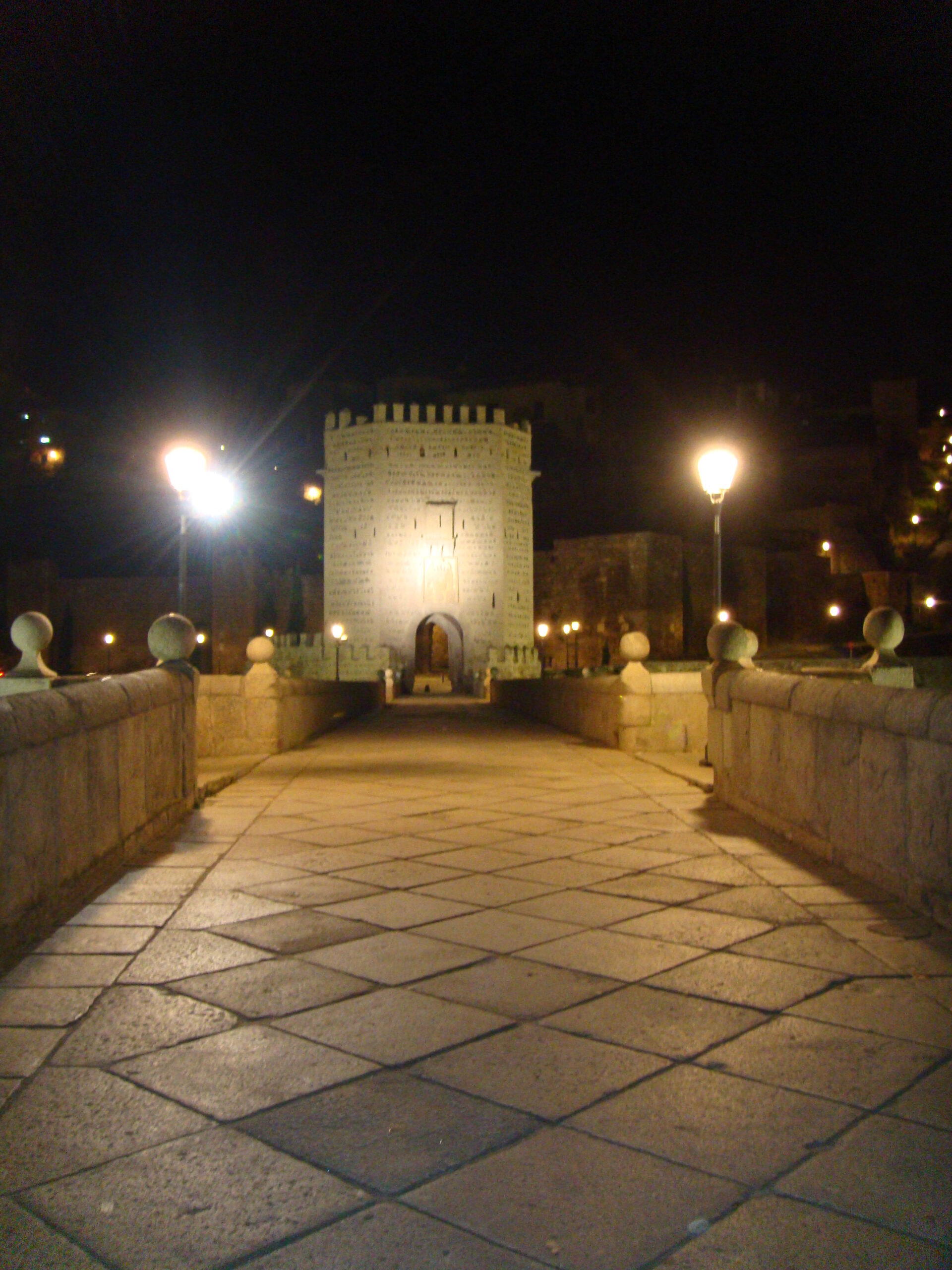
Images of bridges and walls highlight Toledo's defensive geography and city approach. They do not by themselves prove claims about translation, tolerance, or identity.
Useful questions:
- Which period does the image help explain?
- Is the claim about conquest, scholarship, urban life, or later memory?
- What evidence supports the specific claim being made?
Evidence Frame
Toledo is often overused in popular "convivencia" narratives. The safer frame is evidence-first: identify the source, period, institution, and power relationship before drawing conclusions.
It is especially important not to let the city's later fame for translation stand in for every aspect of its history. Translation culture, conquest politics, legal status, and symbolic memory overlap here, but they are not interchangeable arguments.
What to Look For
- The 1085 capture and its effects on taifa politics.
- Translation and knowledge transfer without romantic flattening.
- Frontier diplomacy, tribute, and military pressure.
- Jewish, Christian, and Muslim communities under changing rule.
- Later memory built around Toledo as a symbolic city.
What This Place Should Teach
Toledo should teach readers that exchange and inequality can coexist. It is one of the best places on the site for learning how conquest, scholarship, multilingual work, and power imbalance intersect without resolving into either a harmony myth or a pure-conflict myth. That tension is exactly what makes the city historically valuable.
Related Reading
Read Toledo with the taifa-period route, then move to translation and transmission. Pair those pages with the harmony-myth claim review so exchange is not confused with equality.