
Place Summary
Palatine city associated with the Cordoban caliphate.
Why This Place Matters
Madinat al-Zahra is the clearest place record for seeing Cordoban caliphal power as built environment. It turns the proclamation of the caliphate into walls, halls, approaches, display, administration, and ruin.
Historical Context
The palatine city is associated with Abd al-Rahman III and the high claims of the Cordoban caliphate. Its position near Cordoba allowed rulers to stage authority through architecture, reception spaces, luxury materials, and controlled movement.
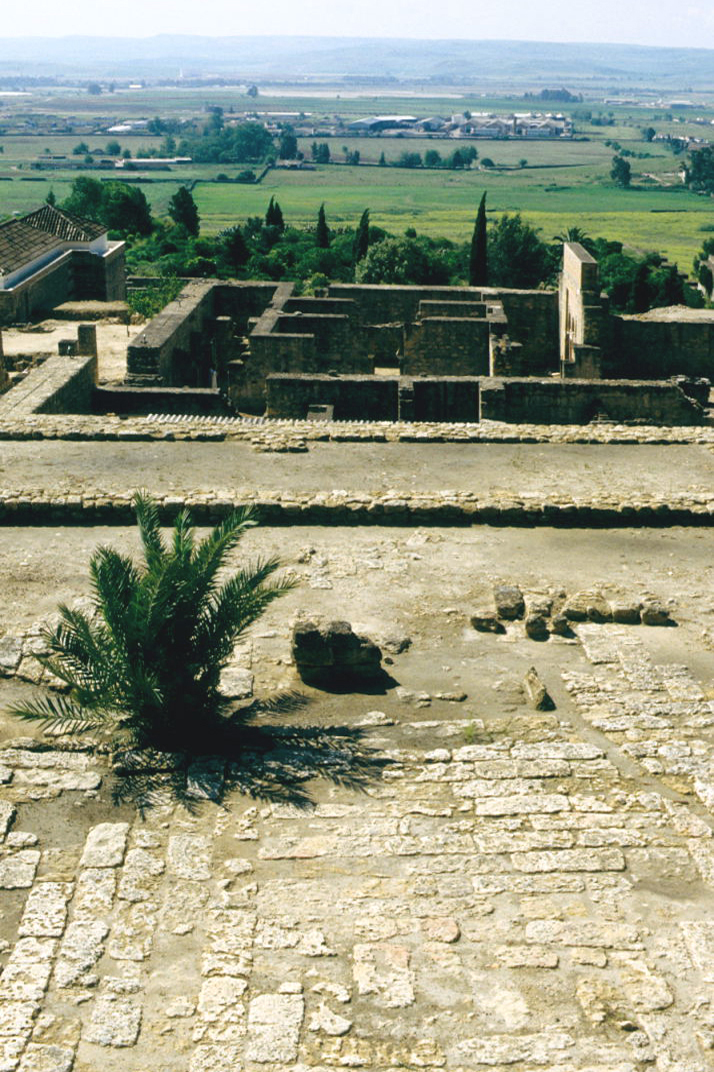
Its ruin state also matters. Archaeology and heritage presentation shape how modern readers encounter a city built to communicate power.
That double status, once a stage of power, now a field of ruins, is what makes the site historically useful. Madinat al-Zahra teaches readers how caliphal authority was materialized, but it also teaches them how much interpretation depends on excavation, reconstruction, and later framing. In other words, it is a lesson in both medieval politics and modern historical method.
Visual Reading Notes
Images of the ruins can make the site look quiet, but the original logic was ceremonial and political.
Useful questions:
- What part of caliphal display does the view help explain?
- Is the image showing excavated remains, reconstruction, or heritage interpretation?
- How does the site connect to Cordoba and the Great Mosque?
Evidence Frame
Madinat al-Zahra has strong material evidence, but interpretation still requires care. Ruins show layout and objects; they do not automatically prove every courtly motive or cultural generalization.
It is best used to support claims about display, planning, and elite environment when those claims are tied to excavated evidence, comparative scholarship, and caliphal context rather than to romantic assumptions about lost splendor.
What to Look For
- Caliphal display under Abd al-Rahman III.
- Court architecture, reception spaces, and controlled approaches.
- Luxury crafts and fragments as evidence.
- The relationship between Cordoba, the Great Mosque, and the palace city.
- Ruins as archaeology and modern heritage, not a complete documentary record.
What This Place Should Teach
Madinat al-Zahra should teach readers that ruins are evidence, not direct access to the past. The site matters because it preserves how caliphal power was staged, but also because it forces readers to think through excavation, absence, reconstruction, and later heritage framing. It is one of the strongest method pages disguised as a place page.
Related Reading
Start with the Caliphate of Cordoba article, then use the material-culture guide to read fragments and display. Compare Madinat al-Zahra with the Alhambra for different palace contexts.