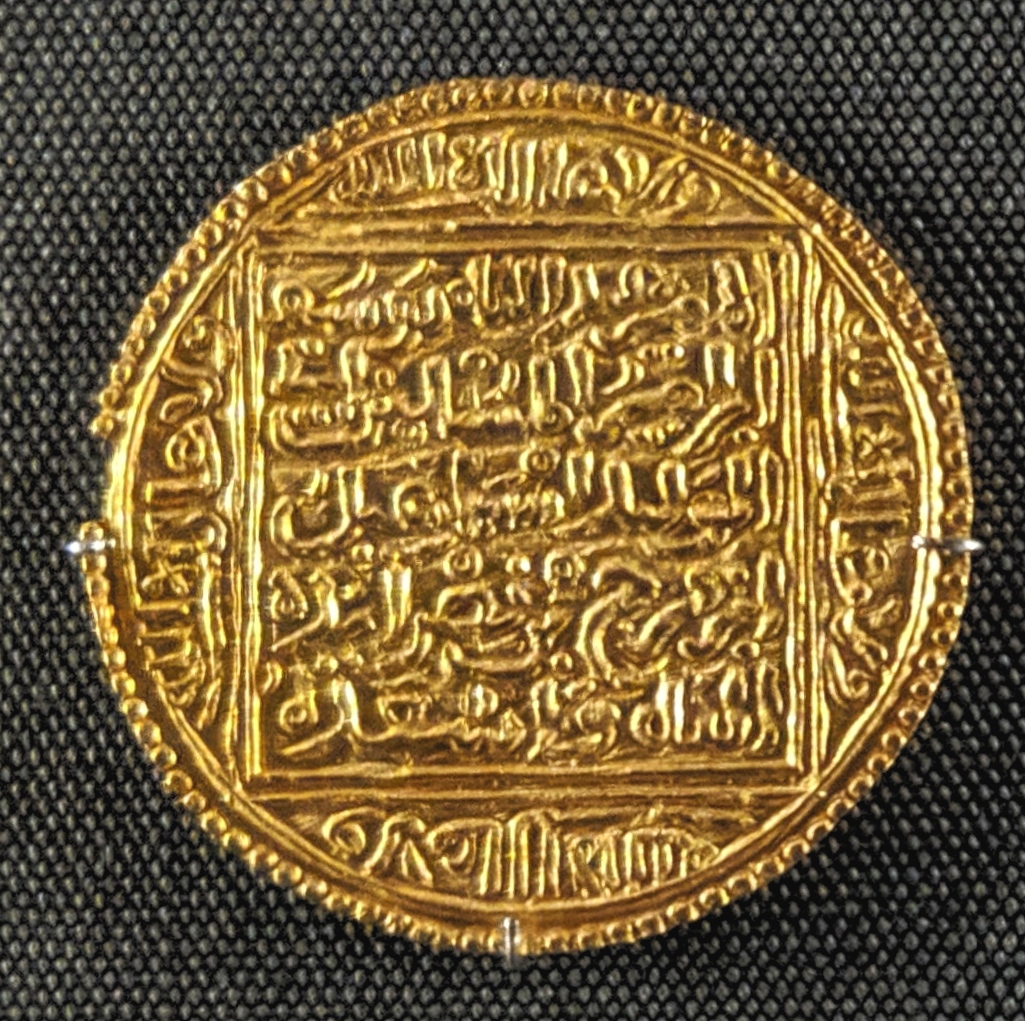

Yusuf I of Granada was a Nasrid ruler whose reign helps readers connect court culture, defense, diplomacy, and the built environment of late al-Andalus. He matters because the survival of Granada depended on more than military luck; it required political calculation and careful patronage.
Why This Person Matters
Yusuf I helps readers understand Nasrid Granada as an active political project rather than only the last remnant of Muslim rule in Iberia. His reign belongs to the world that made the Alhambra a palace of power, image, and negotiation.
He is especially useful because he makes late Granada feel governed rather than merely doomed. Readers often arrive at Nasrid history through the shadow of 1492. Yusuf I helps show that long before final surrender, Granada was a functioning courtly state with strategy, symbolic language, and institutional ambition.
Historical Context
Read Yusuf I through fourteenth-century Granada, where Nasrid rulers balanced internal court politics, relations with Castile, Maghrebi ties, and the need to project authority from a relatively small but resilient kingdom.
His reign is best read as a governance phase where palace culture and state strategy were inseparable. Court patronage, architecture, and ceremonial language were political tools for legitimacy under persistent external pressure and internal factional risk.
The coin featured on this page is a particularly good kind of evidence for that reason. It points to sovereignty, circulation, and formal rule, not just later scenic memory. On a site where Granada is often approached through the Alhambra alone, the coin helps pull the reader back toward statecraft.
What We Can Say With Care
The record supports Yusuf I's importance as a Nasrid ruler linked to Granada's political and cultural consolidation. It is useful to keep the focus on reign, institutions, and patronage rather than treating him only as a name attached to monuments.
It also helps to avoid retrospective collapse logic. Later fall does not mean earlier rulers lacked strategy; it means they operated within tightening structural constraints over generations.
It is also careful to distinguish aesthetic afterlife from historical function. What later viewers admire in Nasrid architecture was, in his own context, part of the work of rulership, prestige, and controlled political display.
Evidence Limits
Names, titles, spellings, and reputations often shift across Arabic, Latin, Romance, Hebrew, and modern scholarly traditions. Treat exact anecdotes cautiously unless a source trail is clear.
Readers should be wary of pages that use Yusuf I only as an architectural label. That weakens the history. A strong account should preserve his diplomatic and institutional role alongside court culture and palace memory.
What To Watch For
- Granada as governed state, not only last remnant.
- Court patronage as political technology.
- Coinage and diplomacy as evidence of sovereignty.
- The gap between later nostalgia and fourteenth-century statecraft.
Connected Reading
Use this page as a bridge into Nasrid diplomacy, Alhambra political symbolism, and the sequence of late-medieval turning points that framed Granada's long survival.