_2.jpg)
Muhammad I ibn al-Ahmar was the founder of the Nasrid dynasty of Granada. He matters because his political choices helped create the framework through which Granada survived as the last Muslim-ruled kingdom in Iberia.
Why This Person Matters
Muhammad I helps readers understand how the Nasrid state emerged from the collapse of larger Almohad-era structures and the advance of Christian kingdoms. His career connects frontier warfare, diplomacy, tribute, urban defense, and dynasty-making.
He is especially important because he prevents Granada from being read backward from 1492 alone. The Nasrid story did not begin as a final chapter or a beautiful ruin; it began as a problem of survival, consolidation, and political calibration under pressure.
Historical Context
Read this profile through thirteenth-century al-Andalus, when Muslim political authority contracted into fewer strongholds and Granada became a center of survival rather than expansion. The early Nasrid order depended on negotiation as much as battlefield strength.
Muhammad I's importance lies in institutional foundations: territorial consolidation, diplomatic accommodation with stronger neighbors, and strategic investment in defensible urban centers. These choices created a framework that later Nasrid rulers inherited and modified.
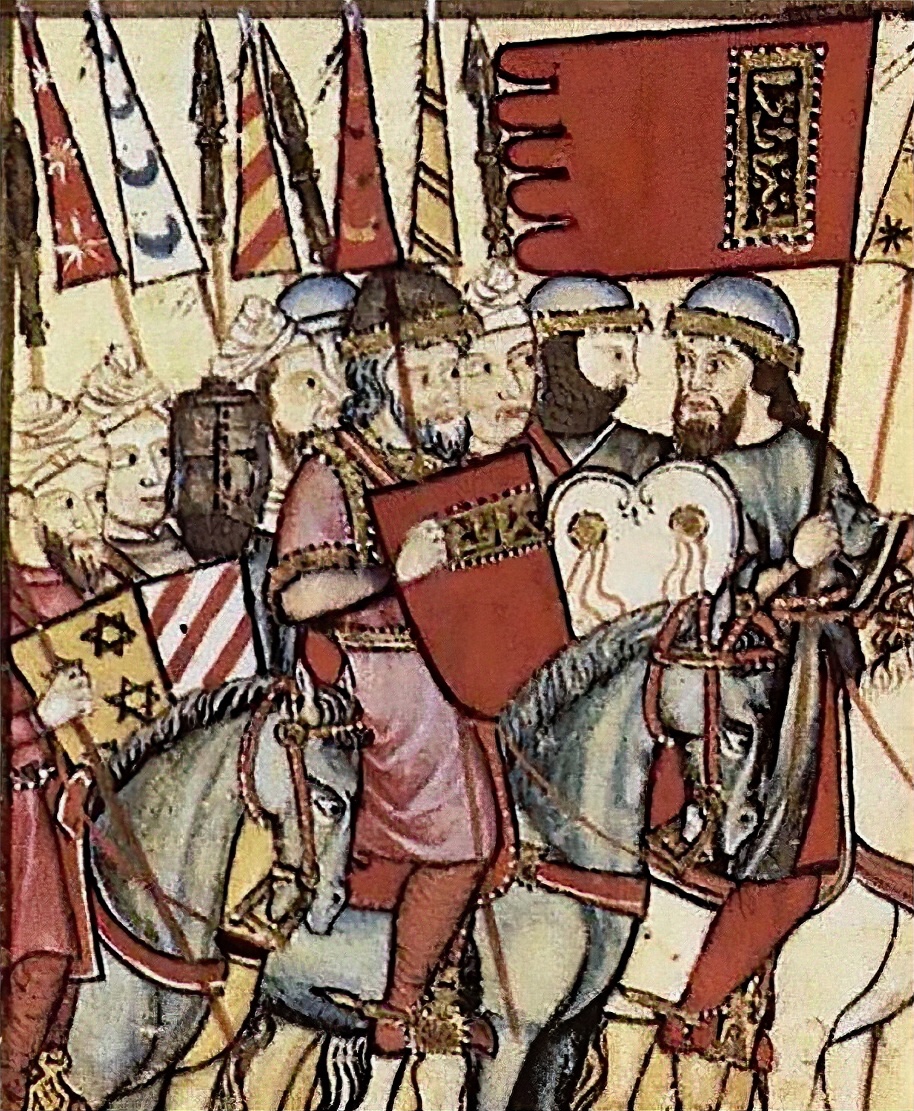
The featured image is a later manuscript-style depiction, not transparent eyewitness evidence. That matters because founders are often retroactively pictured as more unified and emblematic than the messy realities of their reigns. For Muhammad I, the better questions concern fortification, diplomacy, tribute, and regional control.
What We Can Say With Care
The record supports Muhammad I's role as a dynastic founder. The page should avoid treating later Alhambra splendor as if it all began fully formed under him; early Nasrid Granada developed over generations.
It is equally important to avoid reducing his reign to simple vassalage or resistance binaries. Policy moved through calibrated pragmatism that combined tribute, alliance, and selective force.
It is also careful to say that founder status here means building a viable framework under constraint. Muhammad I matters because he made continued rule possible, not because he solved every later Nasrid problem or predetermined the shape of the dynasty's future.
Evidence Limits
Names, titles, spellings, and reputations often shift across Arabic, Latin, Romance, Hebrew, and modern scholarly traditions. Treat exact anecdotes cautiously unless a source trail is clear. Later Alhambra-centered memory can make early Nasrid history look more unified and inevitable than it was.
Readers should also resist reading all later Nasrid prestige back into his personal reign. The Alhambra, dynastic symbolism, and the memory of Granada accumulated over time. A strong page on Muhammad I keeps chronology tight and treats early consolidation as its own achievement.
What To Watch For
- Survival state, not expansion empire.
- Diplomacy and tribute as active strategy, not mere weakness.
- Founder status as institutional framing under pressure.
- Later Granada memory obscuring early Nasrid contingency.
Connected Reading
Start with the Nasrid-emirate founding event, then read Granada and the Alhambra as related but not identical evidence. The diplomacy article helps explain why tribute, alliance, and frontier negotiation were as central to survival as architecture or battlefield success.