.jpg)
Ibn Tufayl matters because he brings together several strands of learned life in twelfth-century al-Andalus: medicine, philosophy, court service, and literary experimentation. He is especially valuable for readers who want to understand how intellectual work circulated within elite political settings rather than outside them.
Why This Person Matters
Ibn Tufayl helps readers connect philosophical inquiry to lived institutions. His reputation rests not only on abstract thought but on the fact that learned expertise in the Almohad period could include medicine, patronage, and advisory roles at court.
Historical Context
Read Ibn Tufayl through the Almohad world, where Iberia and the Maghreb were tied together by political power, scholarly movement, and reform-era patronage. His career belongs to a moment when philosophical and scientific traditions were still being actively argued over within courtly and learned circles.
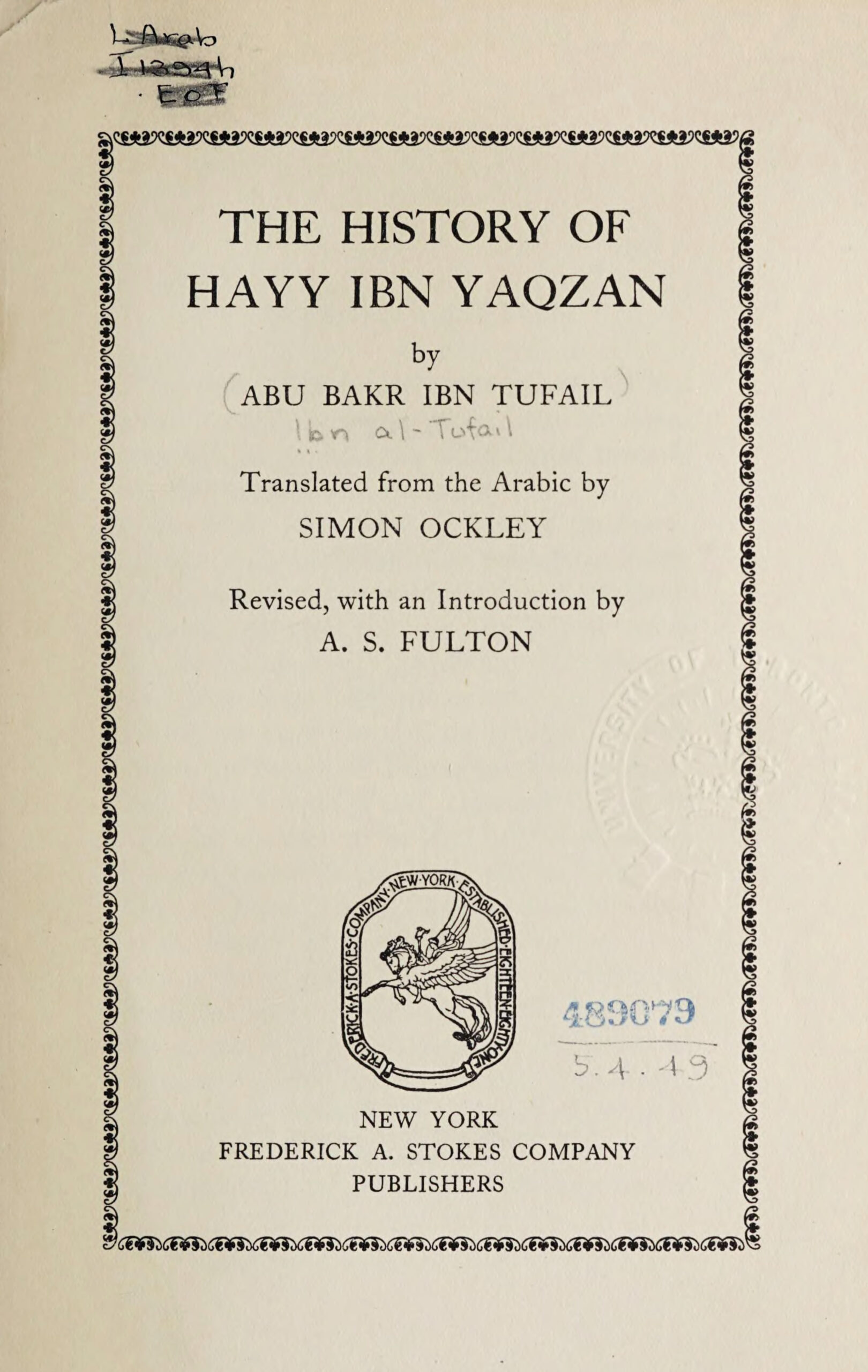
His best-known text, often referred to through Hayy ibn Yaqzan, shows how narrative form could carry epistemological argument. Rather than treat reason, revelation, and experience as isolated domains, the work stages their relationship through a thought experiment that later readers across languages found compelling.
Ibn Tufayl also matters institutionally. His linkages to court environments, and his relationship to the intellectual world around Ibn Rushd, help readers track how ideas moved through patronage networks rather than abstractly from "Islam to Europe."
What We Can Say With Care
The record supports a careful picture of Ibn Tufayl as a major learned figure of the Almohad period. It is more useful to place him inside those institutions and debates than to treat him as an isolated genius floating above the historical world around him.
It is likewise important to avoid claiming a single linear influence path. Transmission involved translators, manuscript selection, pedagogical interests, and later polemical reuse. Ibn Tufayl's significance is strongest when framed through those mediated channels.
Evidence Limits
Names, titles, spellings, and reputations often shift across Arabic, Latin, Romance, Hebrew, and modern scholarly traditions. Treat exact anecdotes cautiously unless a source trail is clear.
Connected Reading
Use this page as a bridge into science and philosophy routes, translation history, and the courtly infrastructures of knowledge in the Almohad age.