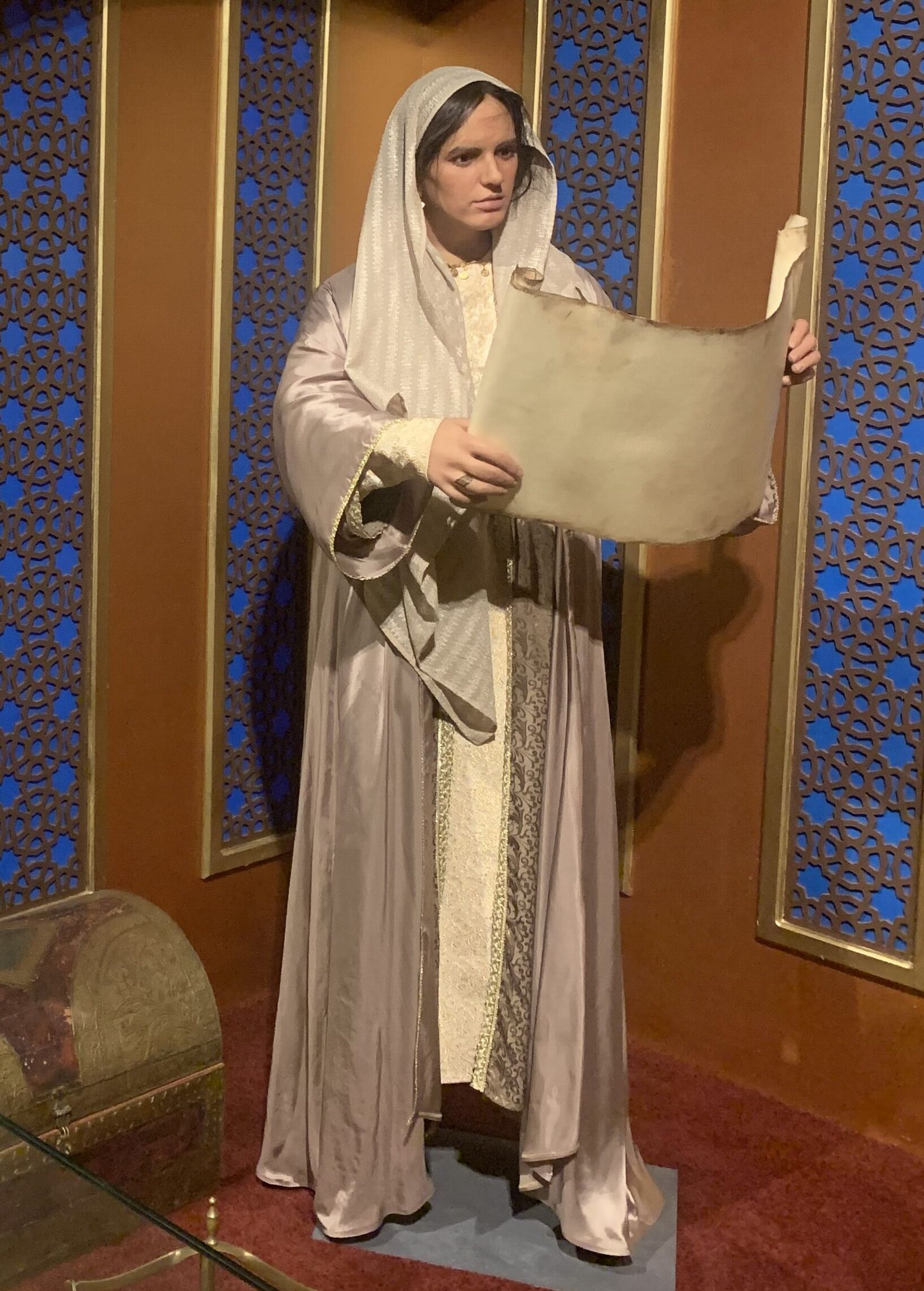
.jpg)
Fatima al-Fihri is associated with the founding memory of al-Qarawiyyin in Fez. She matters because her story links patronage, piety, urban development, and the long history of one of the Maghreb's most important religious and educational institutions.
Why This Person Matters
Fatima al-Fihri helps readers ask careful questions about women, endowments, and institutional memory in medieval North Africa. Her page is also a useful place to explain the difference between a powerful founding tradition and the limits of surviving evidence.
That balance is the whole point. Fatima al-Fihri is often presented online as the founder of the world's first university. The more careful version is both more honest and more interesting: later tradition connects her to the foundation of al-Qarawiyyin as a mosque in ninth-century Fez, while the institution's scholarly and university-like role developed over time.
Historical Context
Read this profile through ninth-century Fez and later traditions about al-Qarawiyyin's growth. The institution's long life does not mean every detail of its origin story is equally documented, but the memory itself became historically important.
Fez grew into one of the major cities of the western Islamic world. Its mosques, markets, libraries, families, jurists, and endowments made it a durable intellectual center. al-Qarawiyyin belongs to that urban history before it belongs to modern rankings about universities.
The Fatima al-Fihri tradition is connected to migration memory as well: the name al-Qarawiyyin points toward Qayrawan/Kairouan, and the story places a woman patron from a wealthy family inside the making of Fez's sacred and scholarly landscape. Even when handled cautiously, that memory matters because it shaped how later generations explained the institution's origins.
Mosque, Waqf, and University Language
The safest way to describe al-Qarawiyyin is to begin with the mosque and its endowment context. Teaching, legal study, library culture, and formal institutional identity grew across later centuries. Calling it a modern-style university in the ninth century can mislead readers, because medieval Islamic institutions did not map neatly onto modern university structures.
That does not make al-Qarawiyyin less important. It makes its history richer. It was a mosque, a center of learning, a library environment, an institutional memory, and eventually a university in modern administrative terms. Fatima al-Fihri's page should help readers move through those layers without collapsing them.
Women, Patronage, and Memory
Fatima al-Fihri's remembered role also opens a broader question: how do we write women into histories where surviving documentation is uneven? The answer is not to overstate certainty, and it is not to erase the memory. The better approach is to say what the tradition claims, explain where the evidence is thin, and show why the story remained meaningful.
Her page should therefore sit near both the al-Qarawiyyin place record and broader articles on cities of knowledge. The value is not only biographical; it is also institutional and historiographical.
What We Can Say With Care
The record supports Fatima al-Fihri's importance as a figure in the remembered foundation of al-Qarawiyyin. The page should present the tradition clearly while avoiding overconfident claims where early documentation is limited.
The page can say that later tradition credits her with the foundation of al-Qarawiyyin. It should not say that we possess a full ninth-century biography, that she personally created a modern university, or that every detail of popular retellings is secure.
Evidence Limits
Names, titles, spellings, and reputations often shift across Arabic, Latin, Romance, Hebrew, and modern scholarly traditions. Treat exact anecdotes cautiously unless a source trail is clear.
Connected Reading
Use this page as a bridge into the relevant places, timeline events, articles, and source records.