Editorial Summary
This page orients readers to astronomy, calendars, instruments, prayer times, navigation, and the practical uses of mathematical knowledge in al-Andalus.
What This Page Establishes
This page gives readers a stable frame for Astronomy and Timekeeping in al-Andalus. It defines the topic, names the evidence problem, and shows how the subject connects to people, places, events, claims, and sources elsewhere in Moor History Center.
That framing needs one more step: astronomy here is not a prestige label. It belongs to working problems. Timekeeping meant prayer, calendars, observation, instrument use, teaching, and technical adaptation. A strong page should move the reader from abstract admiration toward actual practices.
Historical Context
This topic follows knowledge production: books, teaching, patronage, translation, medicine, philosophy, astronomy, and technical practice. The core question is not whether a single label can explain everything, but how power, geography, language, religion, and memory changed across time.
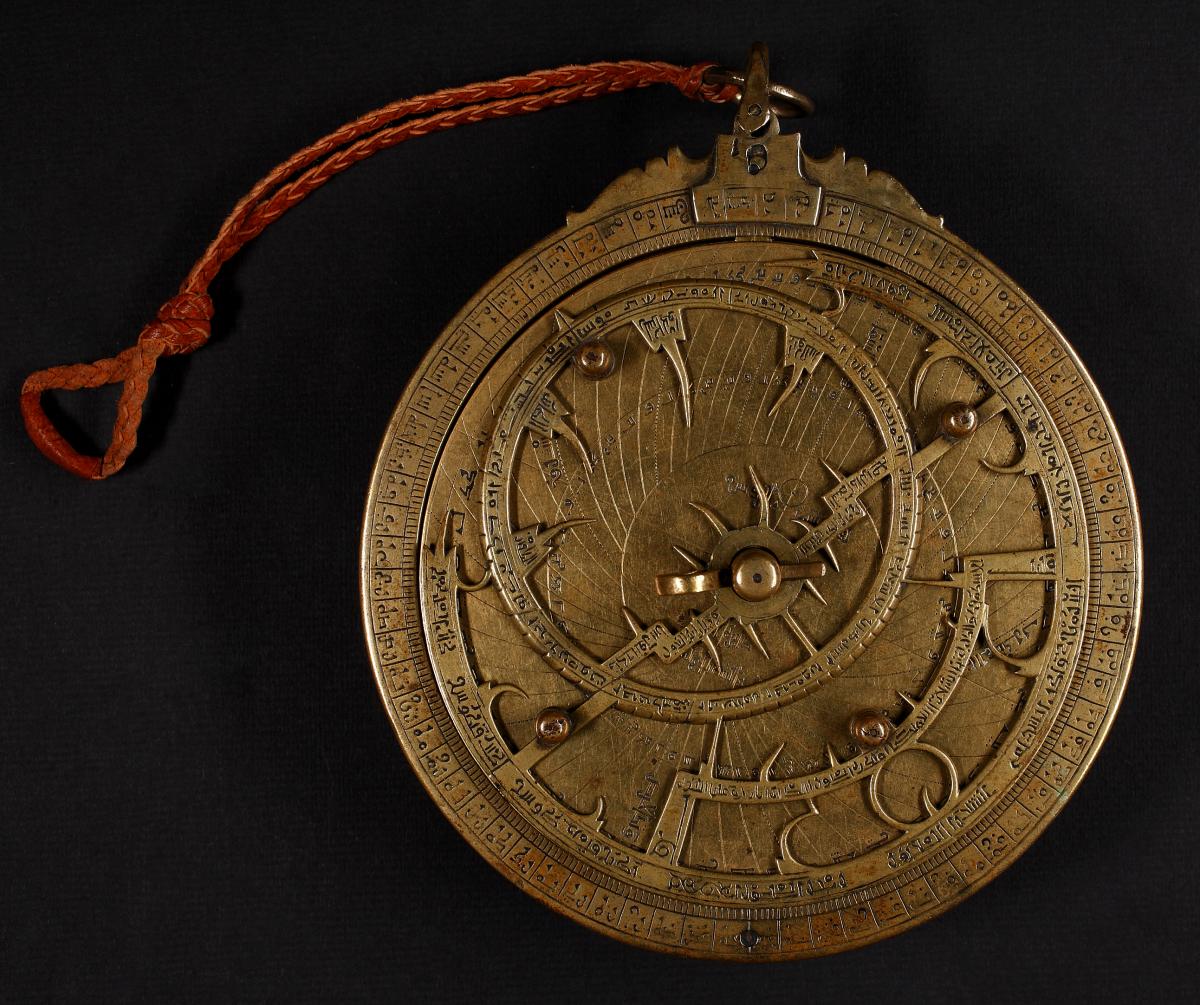
In al-Andalus, astronomy and timekeeping mattered because cities, courts, scholars, instrument makers, and religious life all created demand for accurate reckoning. The astrolabe in the featured image is useful because it points to skilled manufacture and practical calculation rather than to vague civilizational boasting.
Evidence Frame
Transmission was not a single pipeline from one civilization to another; it involved translation, adaptation, debate, and institutional support. The best reading strategy is to compare source genre, date, author position, and later reuse before drawing broad conclusions.
This matters especially here because modern readers often use astronomy as a shorthand for "advanced civilization." That is too blunt. The better question is which problems astronomy solved, who supported that work, what texts and instruments survive, and how later readers reused the story.
It is also useful to keep practical and theoretical work connected. Calendars, prayer times, instrument design, mathematical tables, and observational problems belong in the same field, even if surviving sources emphasize some parts more than others.
What to Ask While Reading
- What discipline is involved?
- Which language or scholarly network carried it?
- What later readers changed or emphasized?
- Is the evidence textual, instrumental, institutional, or anecdotal?
- Does the claim concern practical reckoning, court patronage, religious need, or later memory?
What Sources Let Us Say
The sources let us describe patterns, institutions, events, and terms with reasonable confidence when the claim is limited to a specific context. They are weaker when asked to prove sweeping statements about all Moors, all Muslims, all Iberians, or all later cultural survivals.
More concretely, the evidence can support careful claims about instruments, learned networks, technical translation, and the social uses of calculation. It is weaker when readers try to turn one astrolabe, one famous scholar, or one later anecdote into proof of total scientific supremacy or civilizational uniqueness.
What Remains Cautious
Many surviving texts were written by elites, polemicists, administrators, jurists, chroniclers, or later historians. That means ordinary people, women, enslaved people, rural communities, and minority voices can be harder to see. Where the record is uneven, this page avoids pretending certainty.
This page should also be cautious about scale. Not every city had the same institutions, not every instrument had the same circulation, and not every surviving artifact proves widespread access. Precision about context is more valuable than celebration without limits.
Working Conclusion
Astronomy and Timekeeping in al-Andalus belongs in a layered history. The most useful conclusion is specific: name the century, location, community, and type of evidence before making a claim.