
Place Summary
Capital city of the Umayyad Emirate and Caliphate in Iberia and a major cultural and political center in medieval al‑Andalus.
Why This Place Matters
Córdoba is one of the strongest starting points for Moor History Center because it lets readers connect government, architecture, scholarship, language, and memory in one place. The city was the Umayyad capital in Iberia, and its later reputation often turns into shorthand for al-Andalus as a whole.
That shorthand needs care. Córdoba was important, but it was not all of al-Andalus. Use this page as a hub for the Umayyad capital, then compare it with frontier towns, taifa courts, Maghrebi dynastic centers, and Nasrid Granada.
Historical Context
Córdoba became the political center of the Umayyad Emirate after 756 and later the Caliphate of Córdoba after 929. Its prominence rested on court administration, elite patronage, urban scale, craft production, libraries, and monumental architecture.
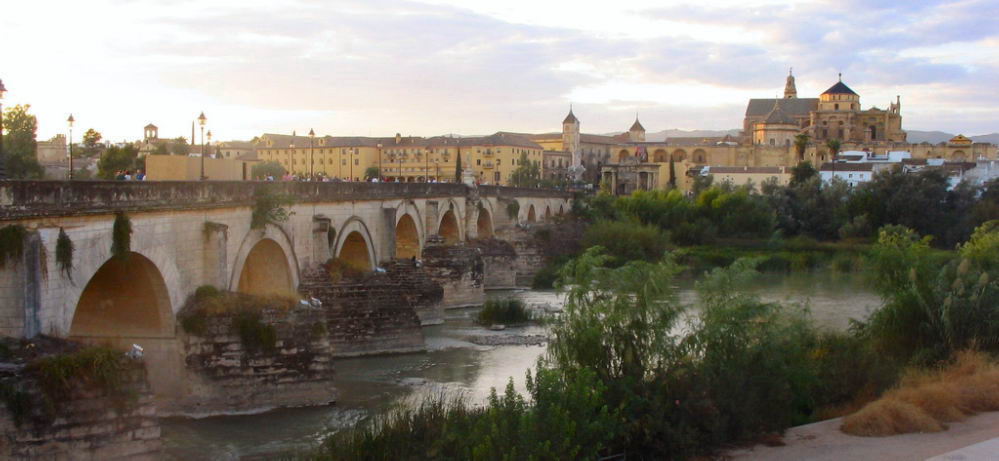
The featured image pairs the Roman bridge with the mosque-cathedral skyline. That visual layering is useful: Córdoba was not made by a single period. Roman, Visigothic, Islamic, Christian, modern heritage, and tourism frames all sit on top of one another.
This is also why Córdoba is one of the easiest cities to misuse. Because it became so famous, later writing often lets it stand in for the whole of al-Andalus. The site needs the opposite habit: use Córdoba as a major capital case study, then compare it outward. Its evidence is rich, but its richness should sharpen chronology rather than flatten it.
Visual Reading Notes
When looking at Córdoba images, ask what period is being represented. A skyline or monument may show later reuse, restoration, and modern presentation as much as it shows the tenth-century city.
Good visual questions for this page:
- Which building phase is visible?
- Is the image showing a medieval object, a later adaptation, or a modern heritage setting?
- What part of urban life is missing from the monumental view?
Evidence Frame
The evidence for Córdoba is strong, but modern memory can flatten the city into a symbol. Keep the chronology specific: emirate, caliphate, taifa aftermath, Christian conquest, and later heritage reuse belong to different arguments.
Readers should also resist letting monumental views do all the work. Córdoba was a city of administration, labor, study, water management, neighborhoods, and social hierarchy, not just a skyline of prestige buildings.
What to Look For
- Umayyad state power and court administration.
- The Great Mosque and its major building phases.
- Book culture, law, medicine, poetry, and philosophy.
- Later Christian reuse and modern heritage presentation.
- The difference between Córdoba as a city and Córdoba as a symbol.