Editorial Summary
The word "Moor" does not have one timeless meaning. It is a historical label whose meaning changes by source, language, place, and period. That is why it has to be defined before it is used to support any larger claim.
What This Page Establishes
This page gives readers a stable frame for using the word carefully. The main point is simple: "Moor" is not self-explanatory. A claim using the term is only as strong as its context.
Historical Context
This topic is mainly about terminology and identity. In medieval and early modern European usage, "Moor" could refer broadly to Muslims, to North Africans, to people associated with Islamic Iberia, or to darker-skinned outsiders as imagined by the writer. It did not function as a clean modern racial category.
That does not mean the term was empty. It means the label gathered together different signals: religion, geography, political opposition, language, and outsider perception. The exact mixture changed depending on who was writing.
The core question is not whether one definition can explain everything. The real question is what the label meant in a given source, and what it could not have meant yet.
Evidence Frame
Do not treat medieval labels as if they mapped neatly onto modern racial, national, or legal identities. The best reading strategy is to compare source genre, date, author position, and later reuse before drawing broad conclusions.
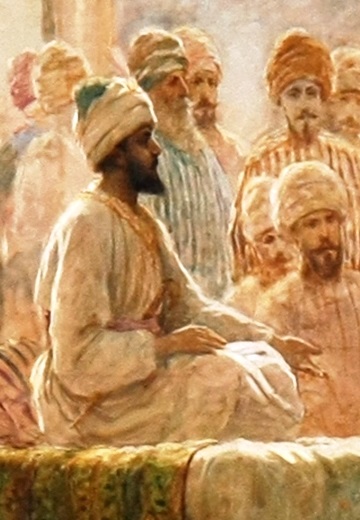
This is especially important because the word survives into modern memory. A medieval chronicler, an early modern English writer, a nineteenth-century painter, and a modern activist may all use "Moor" while meaning very different things.
A Working Historical Definition
A safe working definition is:
"Moor" is a shifting historical label used mainly in European languages for Muslims, North Africans, or people associated with Islamic Iberia and the western Mediterranean, with meanings that vary by source and period.
That definition is useful because it is broad enough to reflect the record and narrow enough to warn readers against false certainty.
What to Ask While Reading
- Who used the label?
- What geography or religion did it point to?
- What later meaning has been added?
Add one more question whenever possible: what other label did the people in question use for themselves? That comparison often reveals the gap between outsider naming and internal identity.
What Sources Let Us Say
The sources let us describe patterns of usage with reasonable confidence when the claim is limited to a specific context. They are weaker when asked to prove sweeping statements about all Moors, all Muslims, all Iberians, or all later cultural survivals.
They also let us say that the populations later grouped under the label were diverse. The word may connect parts of the story, but it does not erase the distinctions among Berber-speaking groups, Arabs, Andalusis, Iberian converts, urban elites, soldiers, jurists, enslaved people, and others.
What Remains Cautious
Many surviving texts were written by elites, polemicists, administrators, jurists, chroniclers, or later historians. That means ordinary people, women, enslaved people, rural communities, and minority voices can be harder to see. Where the record is uneven, this page avoids pretending certainty.
It also avoids pretending that modern uses of the term are historically meaningless. They may carry real cultural or political significance. They are simply not the same thing as medieval source usage.
Working Conclusion
The most useful conclusion is specific: name the century, location, writer, community, and type of evidence before making a claim with the word "Moor." If those pieces are missing, the label is carrying more confidence than the evidence can support.