_-_panoramio.jpg)
Event Summary
The Battle of Ucles in 1108 was a significant Almoravid victory over Castilian forces. It showed that the frontier remained contested after Toledo's capture in 1085 and Sagrajas/Zallaqa in 1086.
What Happened
The battle came after the Almoravid takeover of many taifa realms and showed that Almoravid power in Iberia remained militarily consequential. Castile had gained prestige from Toledo, but the early twelfth century did not become a straightforward expansion story.
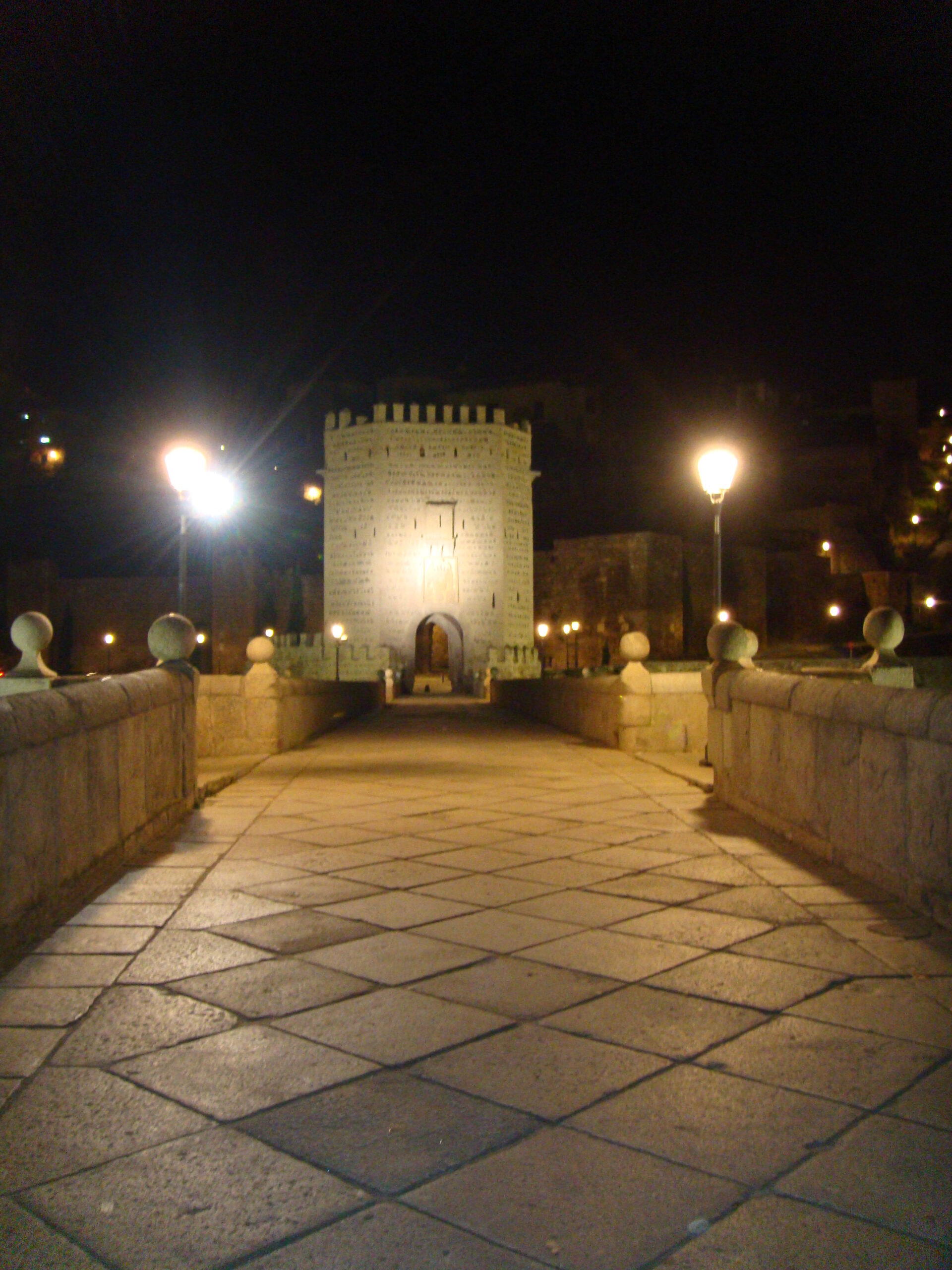
Ucles belongs to the same frontier world shaped by Toledo, Sagrajas/Zallaqa, tribute politics, garrisoning, and shifting alliances. The Toledo image used here is a regional anchor, not a battlefield depiction. Readers should treat the event as part of a sequence of pressure and response.
Why It Matters
Ucles prevents readers from treating Sagrajas as the only Almoravid military moment that mattered. It shows that the early twelfth century was still contested and that Castilian expansion did not proceed in a straight line. It also helps explain why Almoravid rule cannot be reduced to a brief intervention.
It is also useful because it keeps the frontier sequence visible. Toledo, Sagrajas, Ucles, and later battles belong to one unstable field of campaigning, tribute, and political recalculation. Looking at only one battle at a time makes the period seem more linear than it really was.
What Changed
The victory reinforced Almoravid capacity and affected Castilian succession, morale, and military planning. It also confirmed that frontier warfare remained tied to larger Maghrebi-Iberian political structures. The battle strengthened the sense that Iberian politics were connected to North African imperial resources.
The change is therefore larger than the battlefield itself. Ucles reminded contemporaries that cross-strait power could still determine outcomes in central Iberia. That mattered for alliance-making, frontier defense, and the political imagination of both Muslim and Christian rulers.
Evidence Frame
Battle accounts often preserve real outcomes while reshaping numbers, speeches, and heroic detail. Use the event to track military consequence, not to build a single-cause story of Iberian politics. The safest claim is that Ucles mattered in the military and political balance without explaining the entire century by itself.
Readers should also avoid isolating Ucles from the sequence around it. Strong interpretation places it between earlier Almoravid intervention and later shifts in the twelfth century, rather than using it as a self-contained proof of either lasting Almoravid supremacy or inevitable Christian advance.
What This Event Should Teach
This event should teach readers to think in sequences instead of single turning points. Ucles makes the most sense when read as part of a continuing frontier cycle in which victory, setback, tribute, and political adaptation kept reshaping the balance. That is a better fit for the evidence than a one-battle explanation.
Related Reading
- Read Almoravid state-building first for Maghrebi context.
- Compare Toledo, Sagrajas/Zallaqa, and Ucles as a frontier sequence.
- Use diplomacy and tribute routes to keep warfare tied to governance and negotiation.