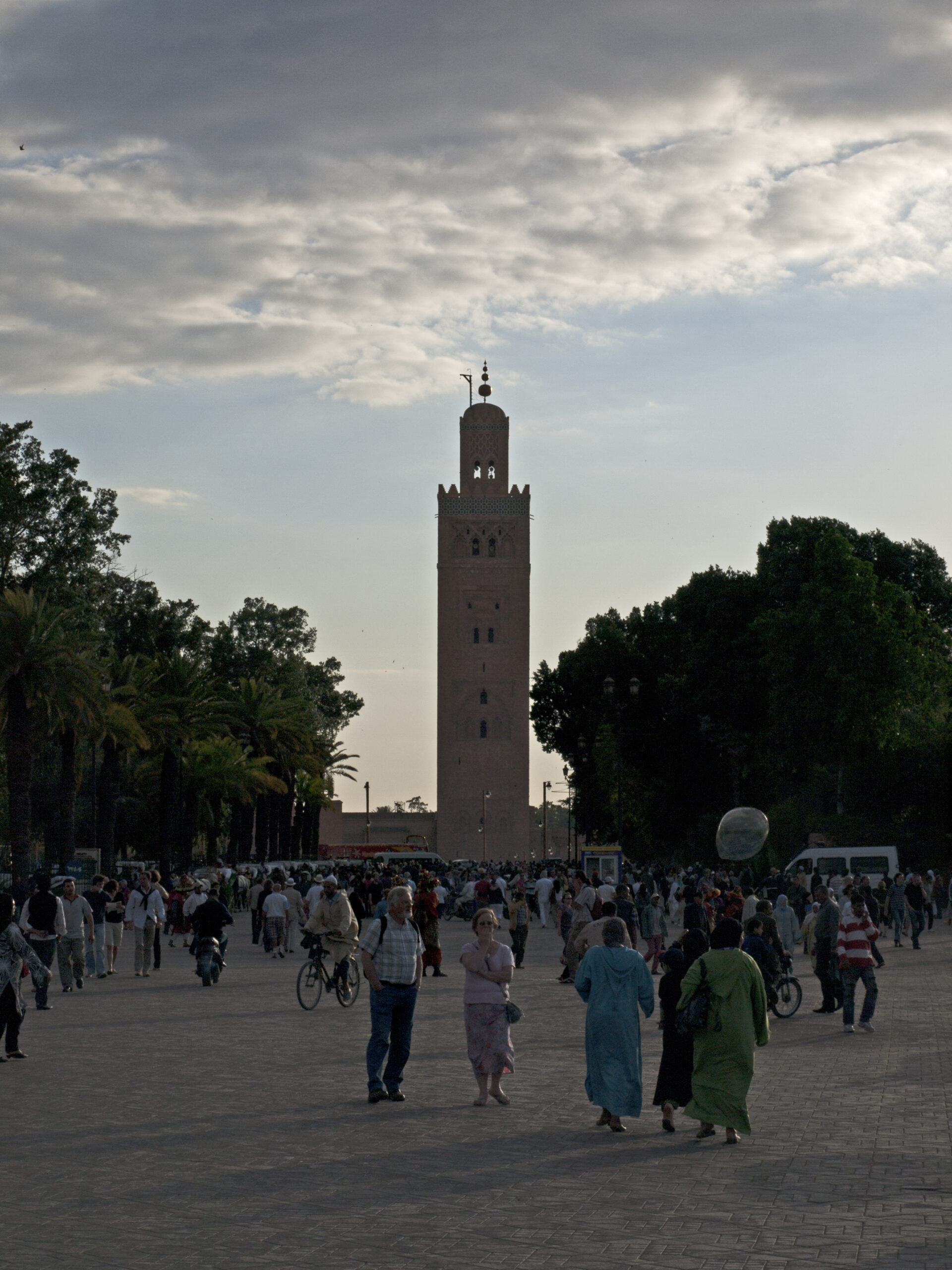

Event Summary
Almoravid foundation of Marrakesh created a major Maghrebi capital.
What Happened
Around 1070, Almoravid leadership established Marrakesh as a new political center in the western Maghreb. The foundation reflected strategic needs: control of trans-Saharan flows, regional consolidation, and a base for expansion into broader Maghrebi and Iberian politics.
Unlike older inherited cities, Marrakesh was built to serve a rising imperial project. Its growth demonstrates that state formation in this period depended on planned urban power as much as battlefield success.
That is why the event deserves more attention than a standard city-founding note. Founding Marrakesh was a decision about where authority, resources, mobility, and future expansion would be organized. The city was part of making Almoravid power, not just a container for power after it already existed.
Why It Matters
Marrakesh's founding links Maghrebi history directly to al-Andalus. It helps readers see that major Iberian turning points were often driven by institutions and resources assembled south of the Strait, not only by Iberian dynasties.
The event is also a useful reminder that cities can be instruments of strategy. Marrakesh was not simply a place where power happened to gather later. Its foundation was part of building the capacity that would make later Almoravid expansion possible.
It is especially useful for correcting an Iberia-first reading habit. If readers only meet the Almoravids when they appear in al-Andalus, they miss the urban, fiscal, and strategic work that made that intervention possible. Marrakesh's founding restores that pre-Iberian story.
What Changed
The Almoravids gained a durable administrative and military hub. Over time, Marrakesh became a dynastic capital whose political gravity shaped taxation, scholarship, mobility, and imperial campaign capacity across regions.
That long-term effect is the key. Founding the city helped transform a movement into an enduring political center. In that sense, the event belongs to the history of infrastructure, empire, and state formation as much as to urban history.
Readers should also see this as a change in scale. A movement with regional reach was becoming a power with a capital, a center of redistribution, and a stronger claim to permanence. Marrakesh made it easier to imagine cross-strait rule because it concentrated the material capacity behind it.
Evidence Frame
The broad chronology and significance are secure, while exact urban development phases are reconstructed from layered sources. A careful reading emphasizes regional integration and planned state infrastructure rather than a single founding moment as total explanation.
It is therefore best to avoid treating 1070 as a magic starting gun. City-building is always a process. What matters historically is that Almoravid leadership intentionally created a center that could organize power, not that every later feature of Marrakesh appeared at once.
What This Event Should Teach
This event should teach readers that capitals are built, not merely inherited. Marrakesh shows how urban foundation can be a strategic act of state formation, tying together trade, mobility, administration, and future military projection. It is one of the clearest Maghrebi preconditions for later Iberian history.
Related Reading
- Almoravid expansion from Saharan networks to Iberian intervention.
- Competing capitals in the Maghreb (Fez, Marrakesh, later Almohad centers).
- How urban foundations express political intent.