
Place Summary
Monumental mosque-cathedral with major Umayyad building phases.
Why This Place Matters
The Great Mosque of Cordoba is a core visual anchor for al-Andalus because it condenses worship, state patronage, architectural adaptation, later reuse, and heritage debate into one site. It is also one of the easiest places for readers to confuse a surviving monument with a simple story.
Use this record to move from the famous arches into building phases, patronage, liturgical space, reuse as a cathedral, and the politics of modern interpretation.
Historical Context
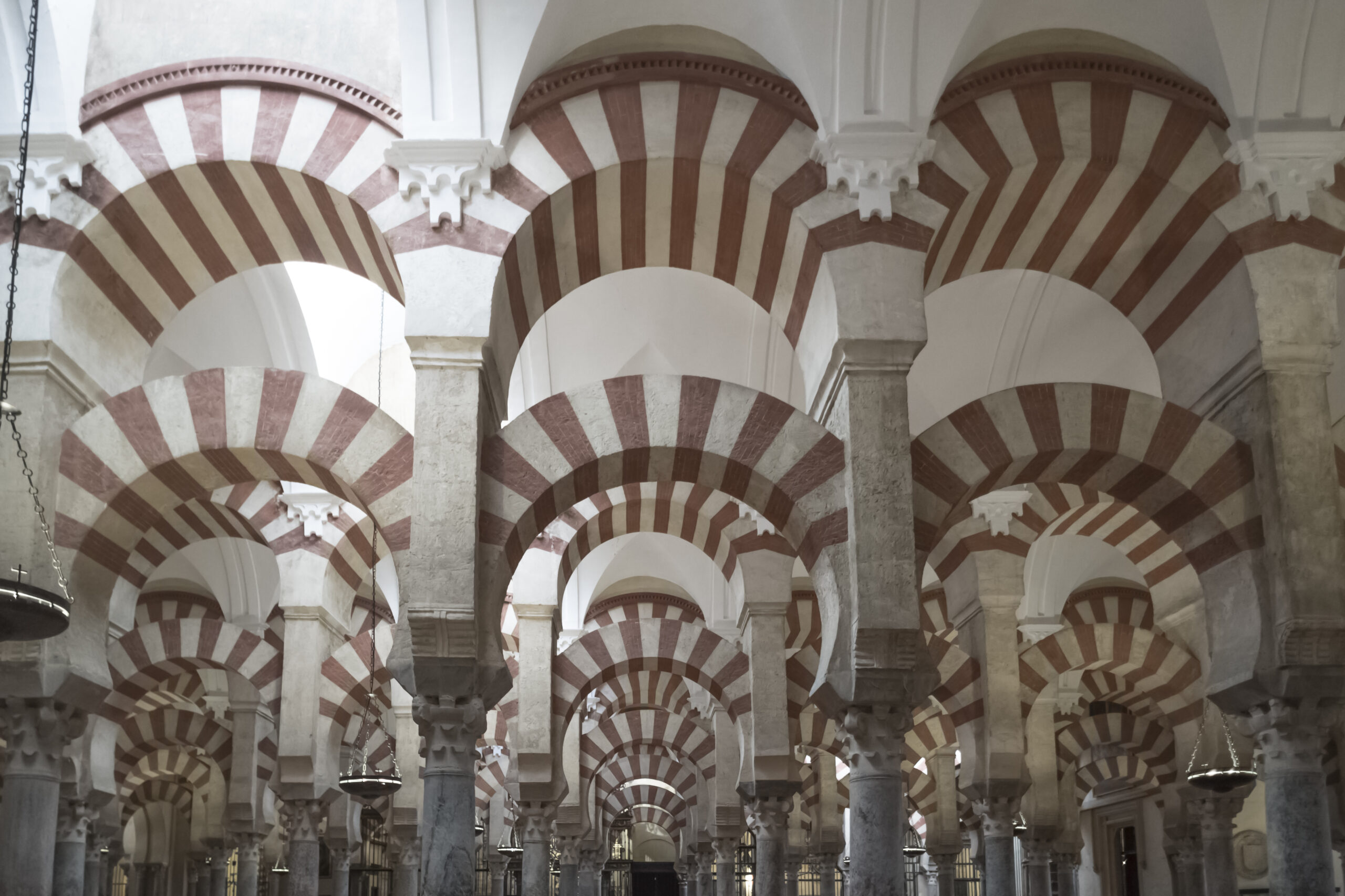
The mosque began under the Umayyads of Cordoba and expanded across later phases. Its hypostyle hall, double-tier arches, mihrab area, and later modifications make it a layered building rather than a frozen object from one moment.
The featured image of the arches is useful because it shows why the monument became visually iconic. It should also push readers to ask about chronology: different phases, repairs, and later Christian additions belong to different historical arguments.
Visual Reading Notes
The striped arches are memorable, but they are not the whole site.
Useful questions:
- Which building phase does the image help explain?
- What is original, modified, restored, or reused?
- How does the monument's later cathedral identity affect public memory?
Evidence Frame
This monument has strong architectural evidence, but casual claims often treat it as proof of broad, unspecific "Moorish influence." Stronger wording ties the site to the Umayyad Cordoban context, later additions, and documented reuse.
Readers should also resist using the monument as a stand-alone argument about coexistence, conquest, or identity. The building is too layered for slogan-history. It becomes most useful when the claim is narrowed to phase, patron, function, and later reuse rather than made to carry the whole history of al-Andalus by itself.
What to Look For
- Umayyad building phases and expansion.
- The relationship between architecture and caliphal legitimacy.
- The mihrab, arches, light, and spatial repetition.
- Christian reuse after conquest.
- Modern heritage debates around naming and memory.
Related Reading
Use the building-phases article before reading the monument as a single image. Then connect the site to the Cordoban caliphate, Madinat al-Zahra, and the broader guide to careful Moorish architecture claims.
What This Place Should Teach
The Great Mosque of Cordoba should teach readers to move from iconic image to historical phase. A famous monument is not automatically a clear argument. The site becomes stronger evidence only when readers learn to separate original construction, later expansion, Christian reuse, restoration, and modern heritage debate.