
Place Summary
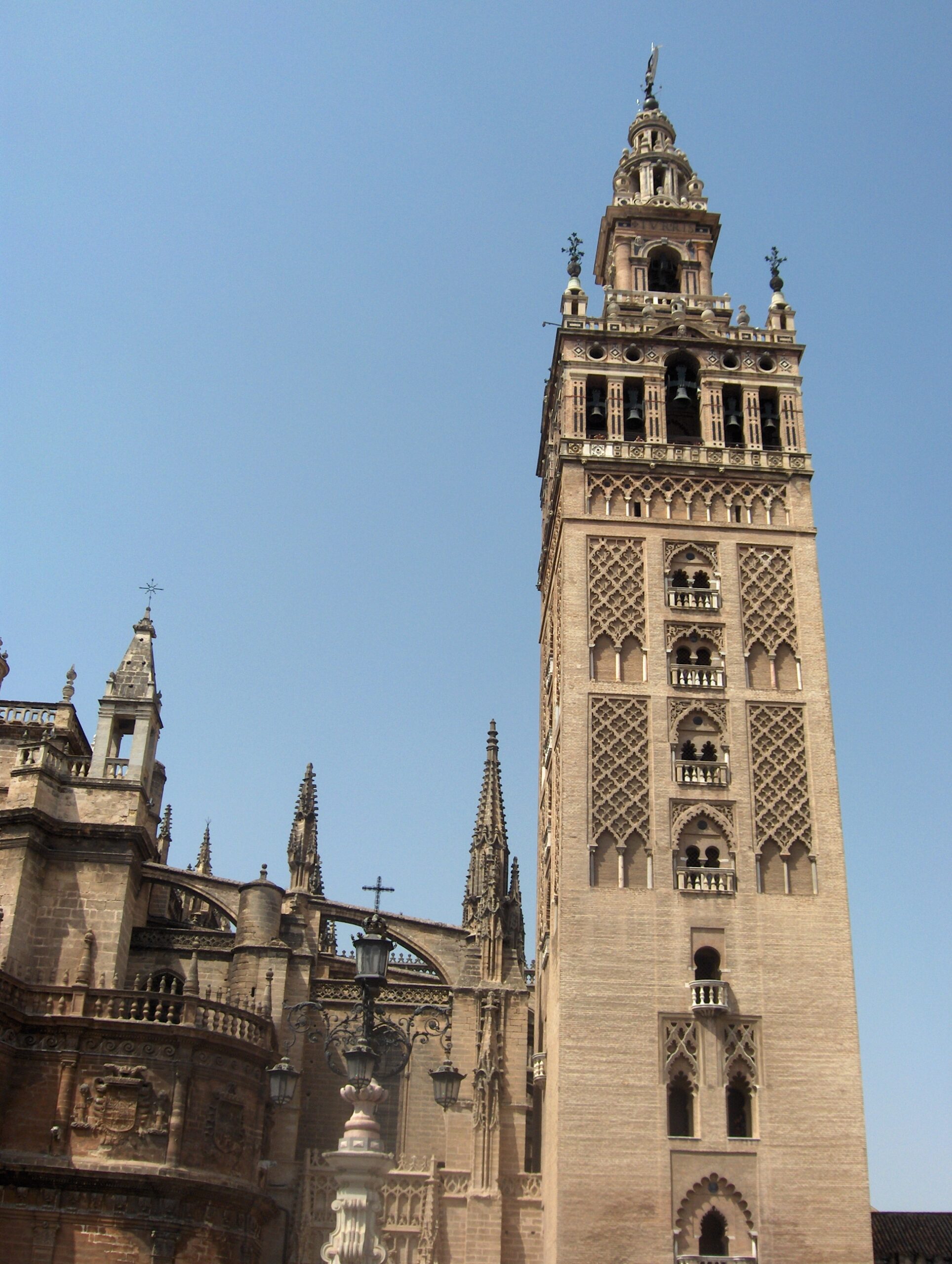
Former Almohad minaret later incorporated into Seville Cathedral.
Why This Place Matters
The Giralda is a central case for reading continuity and transformation in Moor-history monuments. Built as an Almohad minaret and later integrated into a cathedral complex, it preserves evidence of structural adaptation across political and religious change.
It is one of the best teaching sites on the platform for separating inherited form from later reuse.
It also corrects a common reader mistake: treating a famous monument as if it represents one unchanged civilization. The Giralda is more useful when read as a sequence of claims about rule, worship, conquest, adaptation, and heritage display.
Historical Context
The tower's Islamic phase belongs to Almohad Seville, while its later Christian role emerged after conquest and institutional reconfiguration. Rather than treating these as disconnected monuments, the stronger reading tracks how one structure was recontextualized over centuries.
This layered history also shaped modern heritage narratives, which often emphasize visual splendor while minimizing the political violence of transfer.
In its original setting, the tower belonged to a major Almohad urban and religious program in Seville. After the Castilian conquest, the structure was not simply preserved intact as a neutral relic. It was absorbed into a different institutional order, given new liturgical use, and eventually altered to fit later architectural priorities. That long afterlife is part of the evidence, not a distraction from it.
Evidence Frame
The Giralda requires phase-specific claims. Identify which features are Almohad, which are later Christian additions, and which are modern restoration or tourism framing. Without that distinction, architecture claims become overbroad.
It is also important to separate visual continuity from institutional continuity. A tower may retain recognizably Islamic design logic while serving a very different political and religious system. Readers should resist using the monument as proof of uncomplicated coexistence or as proof that conquest erased every prior layer. The site matters because it shows a more complicated pattern than either slogan allows.
What to Look For
- Minaret-to-bell-tower transformation.
- Evidence of continuity versus redesign.
- Monument memory versus political chronology.
- How visual familiarity can hide layered historical change.
What This Place Should Teach
The Giralda should teach readers to ask a narrower question whenever a monument is used as evidence: evidence of which period, which patronage context, and which later reuse? Once that habit becomes automatic, monuments stop functioning as vague symbols and start functioning as historical records with phases, limits, and competing interpretations.
Related Reading
- What Is Moorish Architecture? A Careful Definition
- Architecture Images: What They Can and Cannot Prove
- Museums, Monuments, and Memory: How Moor History Is Presented Today