
al-Qarawiyyin, Fez
Institution in Fez associated with mosque, learning, endowment, and long public memory of scholarship.
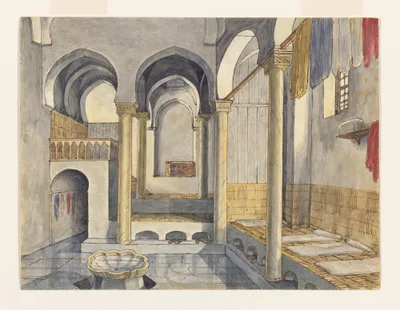
Overview
al-Qarawiyyin, Fez belongs in the MoorOfUS places index because the location helps readers follow Moorish, Maghreb, Andalusi, or Iberian history through geography rather than through slogans. Places are often the first thing a public reader sees: a city, palace, mosque, port, fortress, mountain site, or map marker. The page therefore has to explain what the place can show and what it cannot prove by itself.
Institution in Fez associated with mosque, learning, endowment, and long public memory of scholarship. The modern country label is Morocco, but the historical setting should be read through Fez. That distinction matters. A modern state name helps readers locate a place on a map, but medieval political authority, language, religion, and community did not follow today's national borders. MoorOfUS keeps both frames visible so a place can be useful without becoming misleading.
Historical setting
The historical setting of al-Qarawiyyin, Fez is tied to mosque, learning institution, endowment, Fatima al-Fihri memory. A place may move through several political orders: Roman, Visigothic, Umayyad, taifa, Almoravid, Almohad, Nasrid, Castilian, Portuguese, Hafsid, Idrisid, or later Moroccan, Algerian, Tunisian, and Spanish contexts. Those transitions matter because a building or city may be remembered as Moorish even when its fabric, use, population, and political meaning changed across centuries.
Readers should also separate visual evidence from historical proof. A tower, palace, map, street pattern, or city name can help locate a source trail. It does not automatically prove every modern identity claim attached to the word Moor. The right question is not only whether al-Qarawiyyin, Fez looks Moorish in public memory. The better question is which period is being described, which source is being used, and how the place changed over time.
Why this place matters
al-Qarawiyyin, Fez matters because places make the history concrete. They let readers connect people to routes, events to landscapes, and source claims to physical locations. A careful place record helps prevent two common errors: treating a beautiful monument as a complete history, and treating a modern map label as if it explained medieval identity.
For MoorOfUS, the place index is also a retention tool. A reader who enters through a person page should be able to click into a city or monument and understand the setting. A reader who enters through a timeline should be able to see where the event happened. A reader who enters through a claim should be able to test whether the place actually supports that claim.
What the evidence supports
The evidence supports describing al-Qarawiyyin, Fez as connected to Fez and to themes including mosque, learning institution, endowment, Fatima al-Fihri memory. It supports using the place as a map marker, a source-trail node, and a way to organize related people and events. It supports careful claims about political, architectural, educational, religious, commercial, or frontier significance when those claims are tied to a source.
What the evidence does not support
The evidence does not support using al-Qarawiyyin, Fez as stand-alone proof of a modern racial category, private family origin, legal status, nationality, or universal Moorish descent. A place can be important to Moorish history without becoming proof for every claim later attached to it.
How to use this record
This page is a source-guided public-history record. It is meant to help a reader locate al-Qarawiyyin, Fez inside a period, place, and evidence trail. It is not a certificate of ancestry, a legal identity statement, a private lineage finding, or a shortcut for proving a modern claim. MoorOfUS keeps that boundary visible because many public conversations about the Moors move too quickly from a real medieval term or location into a present-day conclusion that the sources do not actually prove.
The safest way to use this record is to pair it with the related glossary, people, places, event, and source-library entries. Ask what language the source uses, what date range it describes, which political community is being discussed, and whether later memory is being added to the historical record. When the answer is uncertain, the page uses bounded language such as associated with, remembered through, connected to, or useful for reading. Those words are intentional. They keep the record informative without making it carry a stronger claim than the public evidence supports.
Evidence boundaries
The record supports careful statements about Fez and mosque, learning institution, endowment, Fatima al-Fihri memory. It also supports connections to themes such as mosque, learning institution, endowment, Fatima al-Fihri memory. It does not support flattening medieval North Africa, Iberia, and the western Mediterranean into one race, one nation, one tribe, one legal status, or one universal descent line. Those conclusions require a different level of evidence and are outside this page's public-history purpose.
For reader trust and search quality, this page should remain useful even to a visitor who arrives from a search result without background knowledge. That is why the page explains the context, the limits, and the reason the subject matters. If stronger public sources are added to the source library, the record can become more precise, but the core rule remains the same: readers should be able to separate evidence, interpretation, and later memory.
Source trail
- Glick, Thomas F. *Islamic and Christian Spain in the Early Middle Ages* is the current source-library anchor for early al-Andalus, interreligious society, and the need to avoid simplified identity claims.
- Read this record with Who Were the Moors?, What Does "Moor" Mean?, and the MoorOfUS editorial standards.
Reader path
Start with the overview, then compare this page with related people, places, and timeline records. A reader studying a person should check the cities, rulers, and events around that life. A reader studying a place should check the timeline before treating a building or city as proof of a broad claim. A reader studying an event should check which communities and rulers appear before and after it. That habit is the reason this corpus exists: not to make history smaller, but to keep public claims honest.